Saturday, February 20, 2016

Benin: Say You're One of Them

Say You're One of Them
by Uwem Akpan


Benin was really challenging.  A tiny country in West Africa, Benin has not produced many writers whose works have been translated into English, nor has it apparently inspired many to write stories set in its landscape.  Ann Morgan, whose blog "A Year of Reading the World" has provided much inspiration and useful suggestions for me, made the same realization when she struggled to find a book for Benin.  Like Morgan, I picked up a number of books that actually turned out to be set in Benin City, Nigeria rather than the country of Benin.  I finally settled on Uwem Akpan's short story collection, Say You're One of Them.  Only one of the stories was actually set in Benin, but all took place somewhere in West Africa.  I was reluctant to make this one count, but I suppose it's no different than choosing a book for Belize where it's mostly set in California.

I want so badly to like short stories, but I just don't.  I feel there just isn't enough time to get to know any of the characters or to develop plot lines deeply enough.  It's kind of like small talk at a party.  Not very satisfying, at least not to me.  I do appreciate the art form, and I recognize that short stories are probably extremely difficult to write well because of the condensed space in which the writer has to do his or her work.  But I'd rather not read them most of the time. 

These stories though are richly compelling.  Uwem wrote them specifically to call attention to what is happening to children every day across the continent of Africa.  They are the stories of children who are suffering, children who have to grow up too fast, to earn income for their families, to make decision no one should ever have to make, to sell their bodies or be sold, to witness death and abuse and cruelty.  There is a lot of pain in these pages.  These stories take readers to a reality that is rather unbelievable if only we could be so naïve as to pretend we didn't know the truth of what exists out there in the world beyond our comfortable homes and privileged lives.  We are forced, through reading this collection, to look, hold our eyes wide open, and resist the urge to deny their truth.  And that makes them good in a difficult sort of way.


Belize: Wildwood

Wildwood
by Drusilla Campbell


I’m writing this from an airplane, hurtling across the sky towards the Rocky Mountains of Colorado, where I will escape from the daily grind, the sameness of my days, the gray and rainy weather, and a recently acquired routine of spending too many hours at my desk.  With my husband and daughter, I’m planning a few days of something different and expect to return somewhat rejuvenated and refreshed. 

Similarly, the novel Wildwood, by Drusilla Campbell, was something of an escape and a delightful departure from the heavy-themed fiction to which I normally gravitate.  It falls into a category that I fondly think of as “junk food for the brain.”  A little bit of candy or potato chip, just to jazz things up briefly, not intended to sustain or satisfy over the long term, but rather a little departure from the norm.  Campbell’s writing reminds me quite a bit of Jodi Picoult, Diane Chamberlain, maybe Anita Shreve.  Pleasant, interesting, and compelling enough to read straight through, but without the umph to make you think about it for too long after you close the book on the final pages.  I choose this kind of book when my mind is overloaded, or when I’m distracted with too much on my calendar, because reading only a few pages at a time is okay and doesn't cause me to lose the thread of the story.  And this book in particular, I chose because of its partial setting in Belize.

 I’m finding that the kinds of books set in small, vacation destination countries, like Belize, are often books that I really can’t bring myself to spend time on.  Bodice-ripper romance novels, or stories involving frivolous young Americans making fools of themselves in foreign countries, or perhaps crusty old alcoholic men estranged from their families and finding themselves embroiled in some sort of crime or mystery.  Um, no thanks … not my cup of tea.

Wildwood, which is mostly set in California, is the story of three adult women whose friendship has endured over time, distance, and the strain of a shared childhood tragedy that bound them together and tightened its hold over the years.  Two of the women, Hannah and Jeanne, have stayed close to home, cobbling together lives that have some happiness but which fester over unresolved past hurts and anxieties.  The other, Liz, escapes (there’s that word again) to France, and then to Belize where she tries to settle her spirit but finds the past continuing to haunt her.  She returns to California to visit, and realizing that her friends’ lives have been as disrupted as her own, she tries to persuade them to confront the past and release its hold on them.   

Belize is held forth as a place of beauty, serenity, peace, and comfort.  When things become difficult and painful, Liz goes there in her imagination, longing to return to her adopted home, where she feels safe and loved.  This novel won’t satisfy you if you’re seeking to understand Belize.  But if you want to examine friendship and the concept of “home,” or if you just want to get comfy and lose yourself in someone else’s story for a bit, you might enjoy this one.

Sunday, January 24, 2016

Belgium: In the Company of Angels

In the Company of Angels
by N. M. Kelly


I have been unable to sort out my thoughts and, ... well, feelings ... about this slim little tale that is so unusual and perplexing.  I finished it well over a week ago and have read a couple of other books since then, but this one has not been far from my thoughts.  I can't say that I liked it, but the fact that I keep thinking about it suggests something about its quality.  There is some inherent resonance.  I can't decide if it was magical or macabre.  Or maybe it was both.

The plot is hard to describe since you're not entirely clear what is happening for much of the story.
Marie-Claire, a young Jewish girl who is living peacefully with her grandmother after the death of her parents, is the sole survivor when her village is bombed during World War II.  Or is she?  And that is the question around which the story slowly spins and over which I cannot stop mulling.   In the beginning chapter, she is plucked from the rubble of her grandmother's home and secreted away to a convent in a small Belgian village.   The nuns who save her, Mother Xavier and the postulate Anne, both have painful histories of proximity to evil that conflicts with the light and goodness inside them.  They intend to keep her hidden until she can be smuggled to safety, but strange things begin to happen, and no one is sure if they are miracles or something else entirely.

The story is full of contradictions.  There's Anne's romance with a Nazi lieutenant, who later believes her dead and finds himself shooting across an open field at a runaway Jewish child and the nun who is sheltering her, not realizing that he's trying to kill the woman he loves.  And Remy, the village chocolate maker who secretly delivers truffles to the convent each week, each batch more bitter than before as the war continues and he realizes that life will never be the same.  Marie-Claire is innocent and child-like, not cognizant of the mysterious and miraculous phenomenon that follow her to the convent.  And I'm just not sure what to say about it all, other than to borrow words from an author and reader, L.K. Rigel, who reviewed it on Amazon and on Goodreads.  She captures it well by saying, "... like poetry, each word, phrase and image is loaded with deep meaning. This eerie, sweet, sad, horrible and beautiful story is loaded with small feasts for the imagination. I can speak for the book's haunting quality; the characters have not left me yet."

I found myself thinking a lot about imagination while I was reading this.  Do you ever wonder how someone conceives a story and imagines it into existence?  I think about this all the time, especially while reading something especially wonderful or, like this one, especially creative.  While reading In the Company of Angels, I wanted to understand why Kelby wrote it, what happened to plant the seeds of this strange story in her mind, and what she hoped her readers would take from it.  There isn't much written about this book other than comments offered by readers and one short review that I found on Publisher's Weekly.  I feel there must be something profound behind this one, but if so, Kelby doesn't appear to be telling what it is.  So I'll add that to the list of mysteries within the pages of this story.  I'm not sorry I read it, but I'm not sure what to do with it either, other than to leave it spinning around in my own imagination.

Tuesday, January 12, 2016

Belarus: Your Mouth is Lovely

Your Mouth is Lovely
by Nancy Richler


So this was an absolutely delightful surprise of a story and a great reminder of why I'm doing this little challenge ... to push myself to pick up books I might otherwise neglect.   Your Mouth is Lovely follows the life of Miriam, from the moment of her birth in a Belorussian schtetl, through her traditional upbringing, and into her adolescence during the Russian Revolution.  Miriam is our narrator, writing from her Siberian prison cell to the daughter who will never know her.  Except for occasional interludes from the present, we follow Miriam's journey chronologically, growing with her and gaining insight with her as she leaves behind the village's old ways and embraces the passions of her own generation.

Her early days are marked by the tragedy of her mother's death and the uneasy awareness that her birth had been insufficient to instill in her mother the will to live.  Her father, Aaron Lev, leaves her in the care of a foster mother, Lipsa, who envelopes Miriam into her warm, nurturing household and loves her dearly as her own brood of children.  Seven years later, Aaron Lev collects her when he remarries Tsila, a woman reputed to be of sour personality but who also loves Miriam as her own.  These early contrasts in Miriam's life set the stage for what lies ahead.  Things begin to change in the village ... younger women are rejecting the superstitious ways of the past, refusing to marry men chosen by matchmakers, disappearing and resurfacing years later in nearby cities with jobs and strange new ideas.  Still young and sheltered, Miriam accepts things at face value, believing what Tsila and her father tell her, not challenging or questioning what has always been.

Tsila's younger sister, Bayla is one of the women who disappears.  With one foot in the old world, Bayla is betrothed; with one foot in the new, her engagement goes on for years with no sign of nuptials ahead, and she disappears with her fiancé, Lieb.  When Tsila becomes ill, Miriam, now 16, sets off for the city to bring Bayla home.  She finds herself in an exhilarating new world where she lives and works among the young revolutionaries who are standing up for socialist reform in opposition of the Tsar and the government.  At first, Miriam involves herself not for her own ideology, but for the sake of her newfound freedom, independence, and friendship.  Slowly, without even realizing that it's happening, she comes to understand that those things she values, that make her life vibrant and enrich her days, are the very things for which the revolutionaries stand.  Her arrest is as inevitable as her emerging awareness of the world around her.

The female characters in Your Mouth is Lovely were spectacular.  I loved them all for their richness, their honesty, and their heroism during a time in history that was pivotal for all women.  Each one struggled in her own way to navigate the changes necessary to protect themselves and their loved ones and to accept that old ways of thinking would have to be left behind.  I found myself thinking a lot about "Fiddler on the Roof," a musical I performed in during high school but whose meaning, other than my excitement at playing a role I coveted, was mostly lost on my teenage self.  "Fiddler" tells the story of a father, Tevya's efforts to understand the changes going on in Russia and its surrounding areas during a time of contentious politics, religious persecution, cultural reform, and social change.  Tevya has five daughter, each of whom confronts his traditional ways of thinking by asserting herself and forcing him to change and grow.  Your Mouth is Lovely serves as a wonderful companion, telling the tale of the women's perspective ... the mothers, sisters, daughters, friends, and most importantly, through Miriam's voice, the budding female adolescent who is trying to understand and define herself when nothing around her makes much sense.

Highly recommend this one.  Bravo, Nancy Richler ... I'll be looking for more by this author.


Friday, January 1, 2016

Happy, Joyful 2016!


HAPPY NEW YEAR!


This morning, the very first of a whole brand new year, I counted up the countries I've covered in this blog so far ... 16 ... and decided I need to take it up a notch.  My theme for the year 2016 is JOY!  And books top the list of things that feel joyful to me.  Writing about books has proven to be harder than I anticipated, and finding the right book to read for a specific country is downright impossible sometimes.  But as 2016 gets underway, I will endeavor to embrace and enjoy ... joyfully ... the entire process. 

I've selected all of the titles I plan to read for the rest of the "B" countries.  No, you can't have a sneak preview.  You'll have to wait until I read them and write about them.  But here's what I can tell you:

Belarus - I really struggled to find a book I was excited about for this tiny, former Soviet country.  Once identified, I had to special order it, and it's taking its time getting here.  Now that I'm thinking about, all of the smaller Soviet block countries are challenging for me, perhaps because search engines may pull them up as "Russia" but I'm searching on the nation's current name.  I could use help here, so if anyone has suggestions of books set in this part of the world, please share. 


Belgium - Harder than I thought it would be, but I'm happy with my choice.           

Benin, Bhutan, Bosnia and Herzegovina, Botswana, Brazil, Burma  - Excited about these!

Belize, Bolivia, Brunei, Bulgaria, Burkina Faso, Burundi -
Found some, but open to ideas. Email me if you have any suggestions!


The process of searching for these books was a lot of fun.  I spent several hours digging through web sites and following links and trying different combinations of words in Google.  Occasionally, I'd look up and realize an hour had passed, feel guilty, and then remind myself that it's okay to spend time on what bring you joy. 

I'm still reluctant to set a timeframe for myself when it comes to this book-reading journey, but I would like to do better than 16 books in 12 months, especially since I read nearly 60 in all of 2015.  Perhaps my word of the year should be "discipline?" 


Saturday, December 5, 2015

Barbados: The Star Side of Bird Hill


The Star Side of Bird Hill
by Naomi Jackson


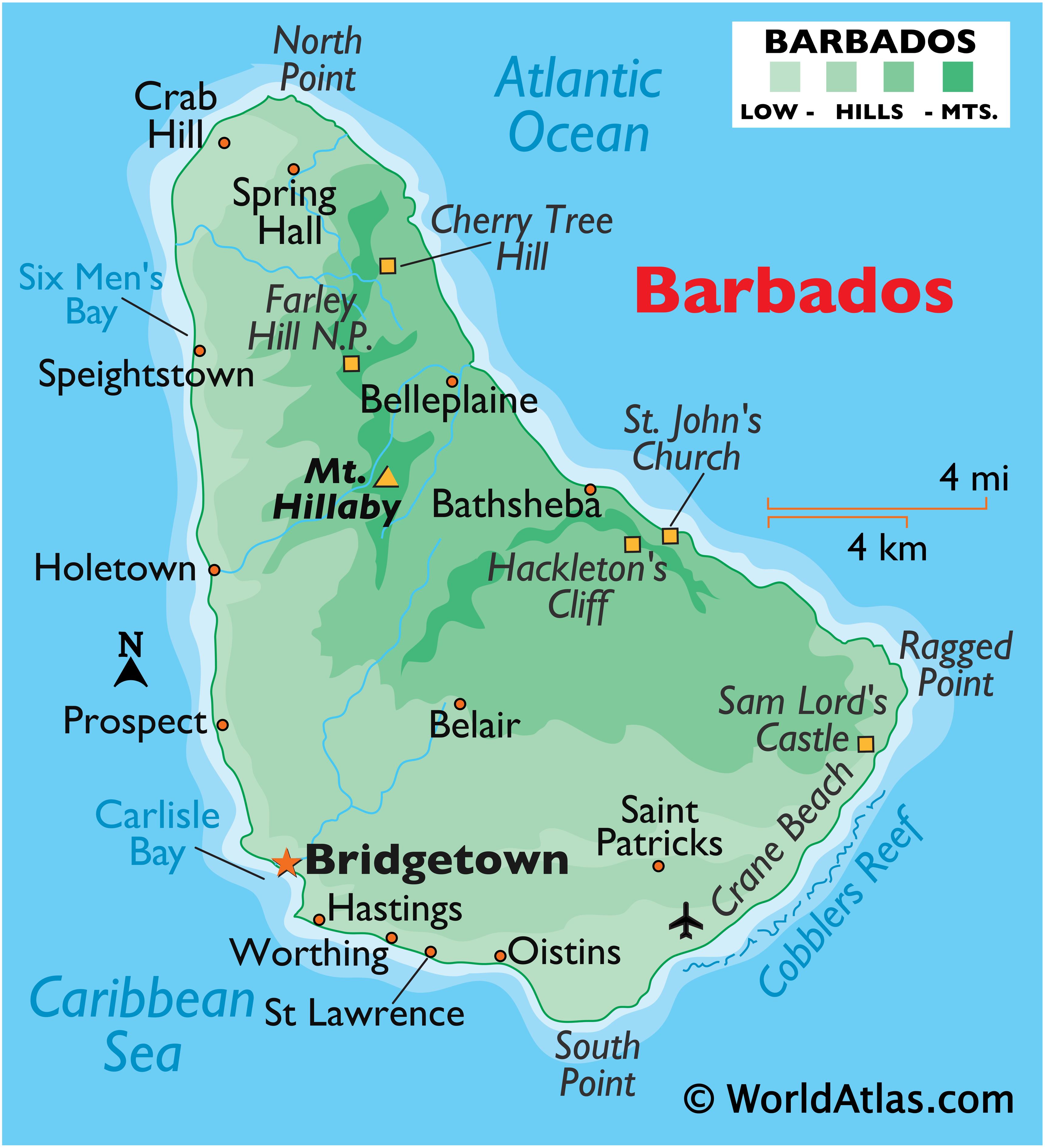
If not for this blog, I would have never picked up this book, and that would have been a real shame since The Star Side of Bird Hill by Naomi Jackson turned out to be a gem of a story.  I'm definitely someone who judges a book by its cover, and that includes the title as well as the picture on the jacket.  For this book, I don't like either.  The title pairs words that don't normally go together, which means it didn't stick in my mind, spark my imagination, or attract me to pick up the book and take a closer look.  Turns out that the title makes perfect sense after you read the story, of course, as does the ugly cover picture of a Carnaval-like clown.  But because of my "so many books, so little time" mantra, the visual and auditory stimulants that the title and cover image provide are often what draws me to or repels me from selecting my next book to read.  Fortunately, I needed a Barbados book, and this one showed up as one that Amazon.com recommended just for me.  And it was fantastic.
 
The Star Side of Bird Hill is a coming of age story about two sister, Dionne and Phaedra, who are sent to live with their grandmother, Hyacinth, in their homeland of Barbados when their mother becomes ill.  Dionne is 16, at a time in her life where leaving Brooklyn for the small island community of Bird Hill is in no way appealing and completely counter to her life vision at that juncture.  She conveys her frustration and disappointment in the way adolescents often do, through rebellion, disrespect, and pushing Hyacinth's boundaries at every opportunity, but we also see a glimpse of her relief at being discharged from the adult responsibilities her mother's illness had foisted upon her.  She no longer has to find food, resolve crises, or act as a parent to Phaedra, who at 10, is more easy-going and open to her new life.  Phaedra's character is strength and grit and softness, all at the same time.  She wears her heart on her sleeve but stands up to anyone who might want to bruise it in any way.  NPR's review says "the book ... belongs to Phaedra," and I agree.  Because of Phaedra, you love Dionne despite her obnoxiousness, empathize with the girls' mother (who is an invisible character, never actually appearing in person), and wish you could sit down for a cup of coffee with Hyacinth to learn more about her life.
 
Jackson takes a long time to set up the novel, and during the first third or so of the book, I wondered if I would wind up judging the content as I had the cover.  But once the current setting is staged, Jackson takes us deeper into what went on in Brooklyn and also in Bird Hill many years previously, before the girls' mother left home.  That context informs the richness of what's happening in the moment with Dionne, Phaedra, and Hyacinth as they forge ahead with their changed relationships and their new sense of what must become normal.  There is tragedy at the end.  More tragedy than two young girls would likely cope with well, and in fact, Dionne struggles.  But Hyacinth and Phaedra are steady in their love and support, and Bird Hill proves to be the best possible backdrop for healing and for hope. 


Sunday, November 22, 2015

Bangladesh: A Golden Age

 
A Golden Age
by Tahmima Anam


A Golden Age, by Tahmima Anam, was featured on NPR, a source I trust absolutely for book recommendations.  But the main reason I chose it for Bangladesh is because my friend Liz told me it was one of her all-time favorites.  I really do want suggestions and really will consider them seriously. A Golden Age was right up my alley, so Liz either knows me well or it was a happy coincidence.  I've already mentioned my fondness for first novels, and this is an example of another homerun for a debut piece of fiction.  I also happen to have a special fondness for books set in South Asia.  I don't know why.  I've traveled a lot but not much in that part of the world other than a quick work trip to New Delhi, India where I didn't see much outside of the hotel and a few government offices where my meetings took place.  Something about those countries' cultures seem rich, vibrant, and enduring, and the setting is ripe for exploring themes that I get absorbed in when reading.  This book fit that description precisely and sparked my imagination through its story of a family that is shocked out of its every day normalcy and thrust into a time of war.
 
Rehana is a young woman when she is widowed by her husband's sudden death, too soon after their arranged marriage that generated deep love and two cherished children, Sohail and Maya.  The novel opens with Rehana's loss of custody because she is too poor to provide for them and moves quickly to her determined reversal of fortune when she improves her circumstances and recovers her babies in only a year's time.  From that point on, Rehana devotes herself to them, never contemplating herself or her future as she steers them towards adulthood and independence.  Just as they are on the brink of coming into their own, the country breaks into a civil war that no one saw coming. 
 
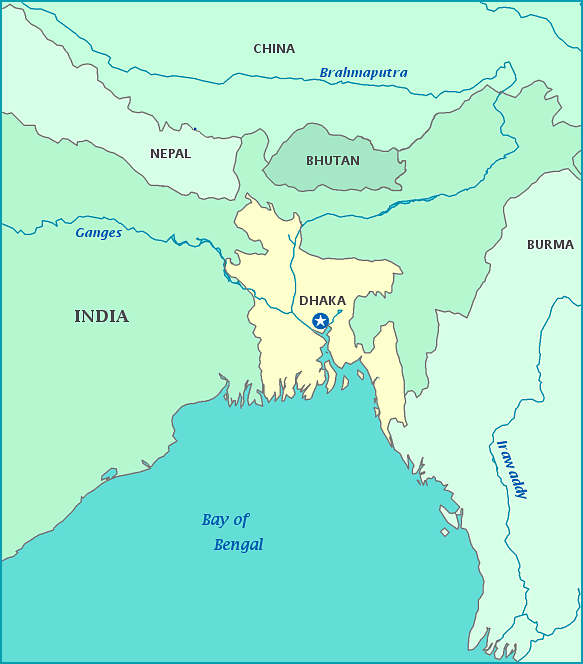
The war that provides the backdrop for the novel took place in 1971, when relations between East and West Pakistan, separated by the enormous country of India, became increasingly hostile.  Sohail and Maya, now young adults, are active on their college campus in protesting West Pakistan's refusal to recognize East Pakistan's elected leaders.  Tensions build quickly, and when the Pakistani army begins killing protesters, Sohail and Maya are pulled into a nationalistic fight for East Pakistan's independence.  Rehana is not especially political but has remained as devoted to her children as she vowed to be when they returned home so many years ago.  She, too, becomes pulled in, first by agreeing to house the resistance fighters, and then, just as the nation of Bangladesh is born, by falling in love with one of them.  As a reader, I also felt pulled ... into the history of Bangladesh, the fierce devotion of Rehana's motherhood, Sohail's determination, Maya's frantic search for her role, and ultimately, the awful choice Rehana is forced to make in the end.
 
There are parts of this novel where you'll find yourself drifting along with Anam's dreamy narrative and others where you'll be holding your breath with anticipation of what happens next.  This is one I'd strongly recommend to anyone!