Showing posts with label Europe. Show all posts

Saturday, March 19, 2016

France: The Nightingale


The Nightingale
by Kristin Hannah
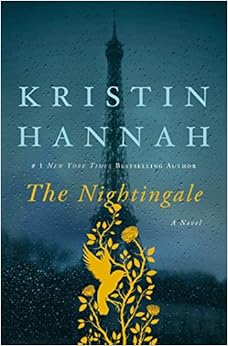


Seems like everyone I know has read this one, and I guess that makes sense since it's been on the NY Times bestseller list for 53 weeks.  The story is richly compelling, one you won't want to put down until you've reached the conclusion.  I love those kinds of novels.  They make me stay up too late at night, walk around the house with the book in my hand, and put off daily chores in favor of squeezing in a few pages at any opportunity. 

Set in France during World War II, this is the story of the French experience of the Holocaust, told from the perspective of two sisters who react to the German occupation very differently but who ultimately find they have more in common than they ever believed possible.  Vianne, the elder sister, is happily married with one child, Sophie, when the war arrives in France and changes everything, beginning with her husband Antoine's departure for the front.  Alone and unsure, she bravely rises to the occasion, coping with the German officers who billet in her home, the loss of her best friend to a concentration camp, and the extreme poverty and hunger that all are facing.  Her younger sister, Isabelle, was always a rebel in youth and continues to be so as she refuses to accept the German occupation of her beloved France and joins the resistance, taking on increasingly dangerous missions to try to save her country and as many human beings as she can along the way.  Their relationship is strained because of childhood trauma - the death of their beloved mother and their father's resulting neglect and absence from their lives.  But as the story unfolds, they realize their beliefs about each other are utterly wrong.  There are more ways than one to be brave and righteous in the face of horror.

I've previously resisted reading Kristin Hannah's novels because I perceived them to be in the chick-lit category, which I have not been very interested in reading.  Holocaust themes, however, generally defy the non-substantive subject matter that I judge chick-lit to embody.  I remember once in grad school, we read Maus I and Maus II, by Art Spiegelman.  These are graphic biographical novels that tell the story of Spiegelman's journey to understand his father's history as a Holocaust survivor and to make sense of their relationship.  The discussions we had in class about these books were complex and heavy ... and ultimately, unanswerable.  How can the Holocaust be conveyed with both accuracy and integrity in any form of art?  Is it appropriate to do so?  Who has the right to do so?  What is our responsibility, as readers, for receiving a biographical account of someone's Holocaust experience?  Does that change if the account is fictional? 

I am drawn to novels about this unthinkable part of human history that took place less than a century ago.  And I've thought a lot about why.  Because it feels really strange to "enjoy" something about a dark stain on humanity.  It's like when my daughter and I visited the Holocaust Museum in Washington, DC last year and afterwards, someone asked us, "Did you have fun?"  Um, ... no.  "Fun" is not the adjective to use for the Holocaust Museum, and neither is "enjoy."  We were so somber, so introspective, so humbled as we walked through the exhibits, we did not speak.  After a short time, we went in separate directions, silently agreeing that we needed to bear witness in our own private ways.

And that's what I think Holocaust fiction does.  It forces us to bear witness.  To look with eyes that can't be shut, to remember, hold space for the victims, and respect the survivors and their descendants who live with the weight of this history.


Sunday, January 24, 2016

Belgium: In the Company of Angels

In the Company of Angels
by N. M. Kelly


I have been unable to sort out my thoughts and, ... well, feelings ... about this slim little tale that is so unusual and perplexing.  I finished it well over a week ago and have read a couple of other books since then, but this one has not been far from my thoughts.  I can't say that I liked it, but the fact that I keep thinking about it suggests something about its quality.  There is some inherent resonance.  I can't decide if it was magical or macabre.  Or maybe it was both.

The plot is hard to describe since you're not entirely clear what is happening for much of the story.
Marie-Claire, a young Jewish girl who is living peacefully with her grandmother after the death of her parents, is the sole survivor when her village is bombed during World War II.  Or is she?  And that is the question around which the story slowly spins and over which I cannot stop mulling.   In the beginning chapter, she is plucked from the rubble of her grandmother's home and secreted away to a convent in a small Belgian village.   The nuns who save her, Mother Xavier and the postulate Anne, both have painful histories of proximity to evil that conflicts with the light and goodness inside them.  They intend to keep her hidden until she can be smuggled to safety, but strange things begin to happen, and no one is sure if they are miracles or something else entirely.

The story is full of contradictions.  There's Anne's romance with a Nazi lieutenant, who later believes her dead and finds himself shooting across an open field at a runaway Jewish child and the nun who is sheltering her, not realizing that he's trying to kill the woman he loves.  And Remy, the village chocolate maker who secretly delivers truffles to the convent each week, each batch more bitter than before as the war continues and he realizes that life will never be the same.  Marie-Claire is innocent and child-like, not cognizant of the mysterious and miraculous phenomenon that follow her to the convent.  And I'm just not sure what to say about it all, other than to borrow words from an author and reader, L.K. Rigel, who reviewed it on Amazon and on Goodreads.  She captures it well by saying, "... like poetry, each word, phrase and image is loaded with deep meaning. This eerie, sweet, sad, horrible and beautiful story is loaded with small feasts for the imagination. I can speak for the book's haunting quality; the characters have not left me yet."

I found myself thinking a lot about imagination while I was reading this.  Do you ever wonder how someone conceives a story and imagines it into existence?  I think about this all the time, especially while reading something especially wonderful or, like this one, especially creative.  While reading In the Company of Angels, I wanted to understand why Kelby wrote it, what happened to plant the seeds of this strange story in her mind, and what she hoped her readers would take from it.  There isn't much written about this book other than comments offered by readers and one short review that I found on Publisher's Weekly.  I feel there must be something profound behind this one, but if so, Kelby doesn't appear to be telling what it is.  So I'll add that to the list of mysteries within the pages of this story.  I'm not sorry I read it, but I'm not sure what to do with it either, other than to leave it spinning around in my own imagination.

Wednesday, April 15, 2015

Austria: The Sojourn


The Sojourn
by Andrew Krivak


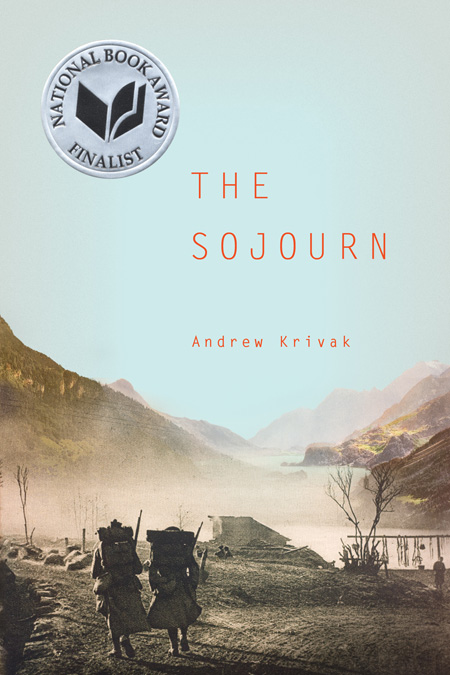
This is a book that will stick with you forever.  Kind of like All Quiet on the Western Front, or The Heart of Darkness, or maybe Cold Mountain.  The narrative is quiet, poetic, and mesmerizing, with vivid descriptions and little dialogue between characters.  Krivak's main intent seems to be to take us into the heart and mind of Jozef Vinich, our young protagonist who leaves his mountain home and beloved father behind to become a soldier during World War I.

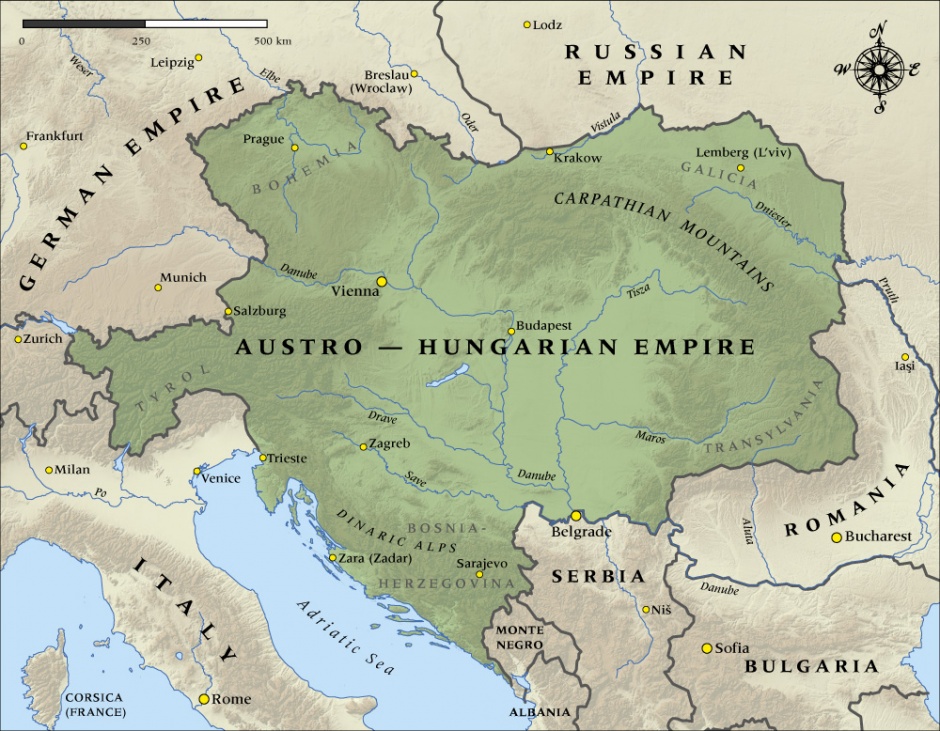
Jozef's story begins just after his birth in America, where within weeks of his arrival in the world, his mother dies in a shocking accident.  His father, left alone to raise his infant son, decides to leave America and return to his home, a village in the mountains of the Austro-Hungarian empire where he and the boy tend sheep and make their way in the world, alone but for each other.  As Jozef learns the way of the shepherd, he also learns the skills of a marksman.  When his cousin, Zlee, comes to live with them, they become brothers, each equally devoted to the man who teaches them how to survive.

All that they learn proves invaluable when, at tender ages of not yet 20, the two boys leave home to join the fighting in what will become World War I.  Although some of the narrative plods a bit in this part of the story, the tale is interspersed with intense moments of the horrors of war, of death, and of loss.  What's magical is that throughout the novel, Jozef's humanity shine like a brilliant star.  The language embodies masculinity, the strong exterior that shields a more vulnerable internal self that loves in the midst of fighting and killing.  It's beautifully done, and while this book won't go on my list of favorites, I can absolutely appreciate its quality and the reasons its received a nod from the National Book Award when it made the shortlist of finalists in 2011.

Worth reading is Andrew Krivak's web page, in particular his discussion of the inspiration behind the story of The Sojourn.  He talks about a photograph of his grandfather that was taken in 1918 when he was a very young member of the Austro-Hungarian army and of the family lore that rolled around in his imagination until it eventually became The Sojourn.  I have a story like that, rolling around in my mind for years, about an old family member with a life story that I'd like to someday write about.  So this background is very intriguing to me, and in a way, I wish I'd been aware of it before I read the book.  It might have enriched my experience of The Sojourn even more.


Austria today
The Austro-Hungarian Empire, prior to WWI


Other Books Considered:

Freud's Mistress, by Karen Mack
Setting Free the Bears, by John Irving
Homestead, by Rosina Lippi
The Exiles Return, by Elisabeth da Waal
The Castle in the Forest, by Normal Mailer
The Accidental Empress, by Allison Pataki

Wednesday, October 29, 2014

Albania: Uncertain Journey


Uncertain Journey
by James Rouman


I had a difficult time settling on a book set in Albania. I really wanted to read something by Ismail Kadare, the literary darling of Albania who was a contender for the 2013 Nobel Prize for Literature, but the local library didn't have a single one of his books. So I picked this one up instead.

Uncertain Journey takes place in Greece and the United States, with only the background of the main character's life story taking place in Albania. Rejep is an illegal immigrant who left Albania in search of a better life. I have an abiding interest in stories about immigrants and find it interesting to consider at what point an immigrant's tale becomes emblematic of the destination country rather than the origin country. This book wasn't quite that ambitious, but it did a decent job of putting a face on the often faceless and controversial issue of illegal immigration.

Rejep decides to leave Albania in search of a better life and a brighter future, as is the case with many immigrants.  First, he simply crosses over into Greece, where he meets Eudoxia, a Greek-American young woman who is living with extended family for a year and trying to figure out her path.  When she returns to the United States, he follows her, and the two strike up a fledgling little romance that is doomed from the start thanks to the intolerance of Eudoxia's mother and the lack of stability that comes with being an undocumented alien in a strange new place.  Rejep finds some limited understanding among the other immigrants, who simultaneously seek a sense of community while also closing the ranks against anyone who is different from them.  There isn't a lot of action in this novel, but that's okay.  What it lacks in excitement, it makes up for in its poignant exploration of the immigrant experience.  I do wish there'd been more about Albania since, after all, that's the whole reason I picked up the book in the first place.

A lesson learned from this selection is that in the future, I will hold out for the book I really want to read, either by being patient and continuing to search until I'm happy with my choice or by breaking open the piggy bank and purchasing the book I feel excited about.  There are a couple of different things at play here.

One is that, as I've mentioned previously, I believe that my books choose me rather than the other way around.  Once I finish one novel, I have to sit with it for at least a day before moving onto the next one, partly to let the story wash over me and partly, I think, to see what book is going to come up next.  I don't like to read two books in a row that are too similar or by the same author (which means it takes me longer than the average bear to get through the current trend of trilogies in YA literature.)  During the gap between books, I will scan my bookshelf at home, see what my friends are reading on Goodreads, take a peek at the Kindle daily deals and in the Kindle store.  If I happen to be out and about, I may pop into Barnes and Noble to see what looks interesting.  And I review my TBR (to be read) list to see what jumps out at me.  Most of the time, I'm drawn to a specific book or at least to a specific genre.  On the occasions I've not listened to that inner book voice, I'm usually unfocused in my reading and often give up before I've gotten very far in the story.  Anyone else have this experience, or have I completely lost my mind?

The other thing going on with me is that I'm trying mightily to embrace a more minimalist lifestyle, and one element of that involves reducing the amount of stuff I own or otherwise bring into my home that has to be dealt with in some way.  These days, being a minimalist can mean a wide range of things from whittling your possessions down to only 100 items or simply exerting effort to declutter, purge, and stop buying things you don't really need.  Getting down to 100 items, or anywhere near that number, is: a) unrealistic; b) unappealing; c) unnecessary; and d) not gonna happen.  I like my big house ... I just don't want it to be filled with junk I don't need.  I like reading on my Kindle ... but I also like real books on my shelves and occasionally, in my hands.  That said, my minimalist leanings have caused me to be more thoughtful about what I spend money on and what I decide is worthy of bringing into my personal space.  In the past, my motto about book buying was "See it ... want it ... buy it."  But I'm trying to be more judicious by frequenting the public library, borrowing from friends, looking for sales, and using the "try a sample" feature on my Kindle.  I haven't really settled into a new normal with this initiative and at the moment, I'm finding it all to be mainly an irritant that is interfering with my enjoyment of the whole book experience.  Which is why, when I couldn't find the Ismail Kadare book I had in mind, I resisted purchasing it and borrowed Uncertain Journey from the library instead.  No disrespect intended to James Rouman, but next time, I'm going to buy the book I really want.  Some of life's pleasures are just worth cluttering up the house.


Other Books Considered for Albania
  • Broken April, by Ismail Kadare (fiction)
  • The Successor, by Ismail Kadare (fiction)
  • The Fall of the Stone City, by Ismail Kadare (fiction)
  • Agamemnon’s Daughter, by Ismail Kadare (fiction – short stories)
  • The Silencer, by Paul Alkazraji (thriller)
  • The Accursed Mountains, by Robert Carver (memoir)
  • Albania’s Mountain Queen, by Marcus Tanner (biography)
  • The Unexpected Mrs. Pillifax, by Dorothy Gilman (mystery)

NEXT UP ... ALGERIA.  Let me know if you have any suggestions!