Sunday, November 23, 2014

Andorra: Death Has a Thousand Doors

Death Has a Thousand Doors
by Patricia Grey


Okay, so I didn't actually finish this book.  I'm not proud of this since I'm supposed to be reading one book per country and the assumption is that I will read an entire book, not just part of one.  However, I really could not waste any more time on this novel than I already had after reading more than 30% of it (Kindle version) and not finding anything at all to hook me in and make me care about the characters, have any profound thoughts or a-ha moments, or wonder what would happen next. 

It was extremely difficult to find fiction set in Andorra.  Many people have never even heard of Andorra and don't have the faintest idea where it is.  I'm proud to say that I actually had hears about this tiny nation, sandwiched in between Spain and France, in the Pyrenees mountains.  Andorra boasts less than 200 square miles of geography and only about 85,000 residents.  Because of its beautiful location and its tax laws,  each year Andorra draws more than 10 million tourists who want to ski and go shopping.  Who knew?!?!

I considered reading Peter Cameron's novel, titled Andorra, but rejected it when I realized that not only the story but also the country ... his Andorra ... is fictionalized.  I wanted the real Andorra as the setting, and if nothing else, Death Has a Thousand Doors provided that.  Upon deciding that I would not, could not, finish reading this book (a decision that I rarely make), I was perplexed about how I could be so displeased with a book that had been a finalist for an award: the Proverse Prize.  Normally, I find value in even the long-listed award books, even if I don't actually enjoy reading them, but that was not the case this time.  So I did a little research and learned that the Proverse Prize is given to "unpublished nonfiction, fiction, and poetry" and the award includes ... you guessed it ... publication of the submitted piece.  This explains a lot, and it also makes me feel a bit more generous in my critique of the book, which is why I'm not offering a long list of its faults and failings.  The author is brand new at this, and the Proverse Prize offers a chance to unpublished writers to get their work out into the public sphere.  I wish I could say I would try another Proverse Prize winner, but I cannot.  While I admire the intentions of the prize, I don't think I'd trust the Proverse panel of judges enough to spend money on another book with its endorsement.

The book, or what I read of it, is a simple mystery ... girl gets divorced, girl goes to Andorra to visit her sister, girl's sister is missing, girl begins to search for her sister, girl meets a man ... That's where I quit.  Let me know if you decide to check it out.  I'd love to know how it ends ... but not enough to spend any more time on it.

As a result of this experience, I'm adding a new rule.  I will only allow myself to quit in the middle of a book five times.  Is that too many?  I thought about saying only three times, but here I am on Andorra, with so many countries ahead of me, and I've already used up one official quit.  I think I'll allow myself five.  I'll also choose my books more wisely in the future!

Thursday, November 20, 2014

Algeria: The Last Life

The Last Life
by Claire Messud


I really wanted to like this book.  I actually did like parts of it, but as a whole, I felt I had to trudge through to the end.  Trudging is not an adjective you want to use when describing a book-reading experience.  Nor is plodding, but this book plodded as much as it trudged.  At least for me.  The reviews I checked out on Goodreads, my quick and easy, one stop resource for reader feedback on books, seemed to reflect opinions divided neatly down the middle.  People either really loved it, or really did not.

The Last Life is my selection for Algeria; however, most of the story takes place in France.  We see Algeria through the lens of reminiscence and memory, not as a place where the novel's action takes place.  Sagesse is our 15-year old narrator, who views herself as French and tries to downplay, or even hide, her Algerian heritage, which belongs to her through her father and paternal grandparents.   She is unwittingly caught up in cultural and political upheaval as she navigates her adolescence in an unhappy home, where her domineering grandparents and meek father pine away for their days in the country they think of as home ... Algeria.  They are, in fact, not Algerian by ethnicity.  Rather, they are among the pied-noir, which means "black boot" in French and was the name used to refer to French colonialists who settled in Algeria and reprehensibly mistreated those native to the land.  Sagesse's father and his family were chased from Algeria, along with the other pied-noir, during an uprising, and returned to their homeland of France.  At the time in which the novel takes place, the liberal youth in France are revisiting  their colonialist history and deeming it immoral.  This leaves many, including Sagesse's grandparents and father, not feeling that they have anywhere to truly call home.

Sagesse's grandfather's misery manifests in a moment of anger and violence that has enormous repercussions for everyone and sets off a series of shocking events that essentially tear the family apart at the seams.  Sagesse doesn't know where she belongs, and the novel is about her journey as she seeks to understand her place in the world, both in terms of where she is rooted and where she seeks to go.  I like coming-of-age stories for their honesty and for how they reflect the feelings and conflicting emotions that are universal to nearly all adolescents.  This element of The Last Life is what I enjoyed the most ... that, and the unusual character of Etienne, who is Sagesse's severely disabled younger brother and a foil for the complexity of the social issues that so profoundly impact Sagesse's world despite her lack of involvement in the history of those issues.

If you like deeply philosophical novels, you might enjoy this one.  Really, there's more philosophy here than story.  You might want to read up on French colonization of Algeria and the post-colonial protests that took place first in Algeria and later in France.  I had to stop midway through the novel and do a little research in order to follow the story.  Messud might have won me over a little more if she'd woven in some background rather than sending me off to Google and Wikipedia on my own. 

Monday, November 10, 2014

Dad: A Tribute in Books


Yesterday, November 9, marked two years since my father passed away, very suddenly with no warning, leaving a trail of shocked and broken hearts behind.  We were very close, and his death was traumatic in a way that is difficult for me to adequately describe in words. Those of you who know me may recall how long it took me to return to something that looked like normal.  And those of you who knew my father will surely understand why losing him is was so devastating. 

When I was helping my mother to clean out his home office, I found among his things a letter I had written when I was perhaps about eight or nine years old.  It was a list of the reasons why I loved him.  Here's what it said.

Why I Like Men Like Daddy
 
1. They never give a definite yes or no.
2.  They don't get mad easily.
3.  They are very easy to talk to.
4. They take time for their kids every Saturday.
5. If their kids go swimming, they are very careful.
6.  They are not too comical but comical enough.

I could write a much longer, more eloquent list now, but I actually like this one a lot.  It works quite like that famous one about Everything I Need to Know I Learned in Kindergarten ... it says all the important stuff in just a handful of words.  My father had a smile for everyone, a warm hug for anyone who needed it, a joke that made you laugh because it was so lame, and the heart of a child who found joy in literally everything he did.  He knew how much he was loved, and that makes me incredibly happy.

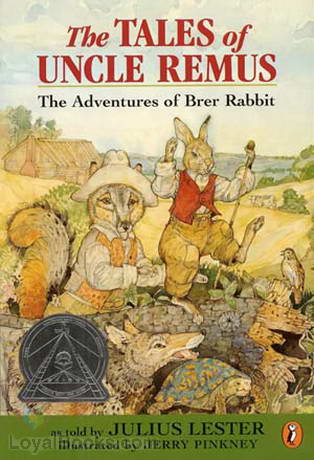
My Algeria book is taking a bit longer than expected to get through, so I thought I'd write about books that make me think of my Dad.  When I was a little girl, I felt so proud of my Dad ... because he could recite The Cat in the Hat by heart!  I assume he acquired that particular talent by reading it over and over and over to me and my sister at bedtime, which was his responsibility and one he took very seriously.  Each evening after dinner, he was in charge of bathing, teeth brushing, the saying of prayers, stories, and tucking us in snugly and lovingly.  We read a lot of Dr. Seuss.  And Uncle Remus, with Br'er Rabbit, Br'er Fox, and Br'er Bear.  Long after I was grown, my father continued to say "Oh pleeeeeease don't throw me in the briar patch!" if there was discussion of something he really, really wanted to do.  (This will only make sense to you if you, too, were readers of Uncle Remus.)  We had a set of Disney books with all of the childhood favorites, like Cinderella and Snow White and Bambi, and lots and lots of Bible stories.  He was always happy to read whatever I brought home from my weekly trek to the library with my mother though.  These are wonderful memories from my childhood. 


As I got older, we graduated to chapter books, classics like Heidi, Pippi LongstockingThe Little House on the Prairie and Charlotte's Web.   Eventually, bedtime became something I did on my own ... although I don't think I ever turned out my light without first kissing him good-night and saying, "I love you."  Reading, too, became more of a solitary pursuit or something I began to enjoy with my mother more than my Dad, who understandably wasn't interested in Judy Blume or later, Danielle Steel. 

Dad never stopped sharing books with me though.  On my bookshelves, I still have several books he gave me, each with an inscription about how much he
loved me and why he thought I'd enjoy that particular book.  Most of them were about religion, leadership, or poems about daughters.  Someone else will have to purge those from my home when I'm long gone; they are far too sentimental for me not to save them.

When I was around 15, Dad's friend, David Poyer, published a book called The Return of Philo T. McGiffin.  I was absolutely thrilled to receive a copy with my first-ever, personalized dedication, handwritten in the front of the book by the author, ... who spelled my name correctly and everything!  The legend behind this book, at least as far as my family is concerned, is that while preparing to write it, Poyer created a huge map of the fictional setting of the story and allowed his friends to name different areas on the map.  To my father's eternal delight, he selected a space on the map and christened it as Bates' Bog.  We scoured The Return of Philo T. McGiffin, to no avail ... nothing happened in Bates' Bog in that book.  I've always wondered if it showed up in any of the others Poyer wrote. 

As a Captain in the U.S. Naval Reserve, Dad loved naval fiction, and as a deeply spiritual man with a strong Christian faith, he loved inspirational books by Charles Swindoll and other similar writers.  And then there was the political side of him.  He was a passionate Democrat who loved Bill and Hillary Clinton.  He read many left-leaning books about politics, social justice, and community.  From his shelves, I have kept It Takes a Village, by Hillary Clinton, and The Working Poor, by David Shipler, as I recall we had some really outstanding conversations about these two. 

How I wish I could have one more conversation with my father.  I know just what I would say:  I miss you, I love you, and I am so, so grateful for every moment we shared.  What makes the loss of him bearable is knowing how incredibly lucky I was to be his daughter.  I am reminded of a passage from the storybook he read most often to my children, The Velveteen Rabbit.


"What is REAL?" the Velveteen Rabbit asked the Skin Horse one day. "Does it mean having things that buzz inside you and a stick-out handle?"

"Real isn't how you are made," said the Skin Horse. "It's a thing that happens to you. When a child loves you for a long, long time, not just to play with, but REALLY loves you, then you become Real."

"Does it hurt?" asked the Velveteen Rabbit .

"Sometimes," said the Skin Horse, for he was always truthful. "When you are Real you don't mind being hurt."

"It doesn't happen all at once," said the Skin Horse. "You become. It takes a long time. That's why it doesn't happen often to people who break easily, or have sharp edges, or who have to be carefully kept.

Generally, by the time you are Real, most of your hair has been loved off, and your eyes drop out and you get loose in your joints and very shabby. But these things don't matter at all, because once you are Real you can't be ugly, except to people who don't understand. But once you are Real you can't become unreal again. It lasts for always."

Thank you, Dad, for making me Real.

Sunday, November 2, 2014

In the River Sweet


In the River Sweet, by Patricia Henley


This book is not part of the official challenge to read my way around the world.  In keeping with Rule #4, I picked this book off my shelf to read while, per the Albania Lesson Learned, I am waiting for the right Algeria book to come my way.  Years ago, I read Patricia Henley's novel, Hummingbird House, which was a National Book Award finalist and has a good rating of 3.7 stars on Goodreads.  I remember that I didn't particularly enjoy Hummingbird House, and had I recognized that In the River Sweet was by the same author, I probably wouldn't have bought it.  But the description on the book jacket intrigued me, so last Sunday while my husband Tim watched football, I curled up on the couch with a glass of wine and dove in.

And I really loved this story.

In the River Sweet takes place in present day, small town Indiana but swings back into the time of 30 years prior and the place of Saigon, Vietnam, during what the Vietnamese call the American War.  The novel is essentially about memory and loss and the ways in which the choices we make as individuals can generate pain for those we love, despite our best efforts to avoid doing exactly that. 

Johnny and Ruth Anne have been married a long time and are still deeply in love.  The novel begins as they are settled in middle age, happy with their quiet life in the Midwest, with Johnny running a restaurant and Ruth Anne working at the library.  Their daughter, Laurel, is a young adult, full of youth's vigor and promise, and just in love for the first time, with a woman she met at her father's cafĂ©.  Laurel's sexuality shocks and worries Ruth Anne, whose devout Catholicism challenges her to be accepting.  In addition, it stirs up deeply buried memories of a time in her own life when she made decisions not in keeping with the Church's doctrine.  While the family is adjusting, Ruth Anne is dealing with her cantankerous and often cruel aunt, who raised her and who is now dying.  Ruth Anne must also confront her feelings about forgiveness.  It is a confusing time, made bearable only by the steadfastness of her relationship with Johnny.  As she grapples with the conflict between what the Church has taught her to believe and what she actually feels, she confronts her past in a way that compromises the security of all she has built with Johnny over the years.

There's a lot in the novel that I can't talk about in a review for fear of spoiling it for other readers.  You'll have to pick it up yourself to find out what happens in small town Indiana when two young women fall in love, why Ruth Anne leaves her infant son behind when she returns from war-torn Vietnam, and what happens when she finally tells Johnny after 30 years of silence. 

Instead of focusing on plot, I'd like to take a moment to comment on Henley's style, specifically that she is minimalistic with her details and she doesn't use quotation marks.  I've never liked reading books without quotation marks and usually avoid them, even Cormac McCarthy's well-loved and highly regarded novels.  I find it distracting to be unsure of who is speaking or where a verbal comment is distinct from an unspoken thought.  But now, with this book, I find that I appreciate the mood it creates for me while reading.  This time, I didn't try to pin down the narrative and instead, let it wash over me while I focused on absorbing the images and meanings the words evoked. 

I found it to be rather like listening to a song on the radio, where you might not discern clearly all of the lyrics but it doesn't matter because the impact of the song comes from more than just the words.  There's the music, as a whole and from each individual instrument, differing between the verse and the refrain, perhaps featuring an instrumental solo, a soul-searing moment of harmony, or a bridge played in the minor key.  And of course, with music there is also the listener's own story.  What we bring to our experience of a song informs how we feel as we listen and what we think about the music.  The same can be said of books.  What I bring to the table as I open to the first page will certainly inform what I take away as I close the book at the last page.  In grad school, I studied this as reader response theory.  In my current life, I recognize this as simply one of the beautiful things about literature ... or any other form of art, for that matter.

My little girl, who is now 16 years old, was born in Vietnam.  When she was just shy of six months old, Tim and I departed from Dulles airport on New Year's Eve ... our first time out of the country ... and flew halfway around the world.  More than 24 hours later, we landed in Saigon, where we then got on another plane to Nha Trang, and then rode in a van along a bumpy coastal highway to a tiny orphanage in Tuy Hoa.  Everything about Vietnam was so different from anything I'd seen before, we may as well have been on another planet.  Four days after getting on that first airplane, we met our daughter for the first time, and a month after that, we brought her home.

Our lives were completely changed in a number of ways by adopting our amazing Grace and through our experience of her beautiful birth country.  I undoubtedly left a piece of my heart there and am drawn to any story that helps me to learn more about Vietnam.  This one, for me, was magical.

Wednesday, October 29, 2014

Albania: Uncertain Journey


Uncertain Journey
by James Rouman


I had a difficult time settling on a book set in Albania. I really wanted to read something by Ismail Kadare, the literary darling of Albania who was a contender for the 2013 Nobel Prize for Literature, but the local library didn't have a single one of his books. So I picked this one up instead.

Uncertain Journey takes place in Greece and the United States, with only the background of the main character's life story taking place in Albania. Rejep is an illegal immigrant who left Albania in search of a better life. I have an abiding interest in stories about immigrants and find it interesting to consider at what point an immigrant's tale becomes emblematic of the destination country rather than the origin country. This book wasn't quite that ambitious, but it did a decent job of putting a face on the often faceless and controversial issue of illegal immigration.

Rejep decides to leave Albania in search of a better life and a brighter future, as is the case with many immigrants.  First, he simply crosses over into Greece, where he meets Eudoxia, a Greek-American young woman who is living with extended family for a year and trying to figure out her path.  When she returns to the United States, he follows her, and the two strike up a fledgling little romance that is doomed from the start thanks to the intolerance of Eudoxia's mother and the lack of stability that comes with being an undocumented alien in a strange new place.  Rejep finds some limited understanding among the other immigrants, who simultaneously seek a sense of community while also closing the ranks against anyone who is different from them.  There isn't a lot of action in this novel, but that's okay.  What it lacks in excitement, it makes up for in its poignant exploration of the immigrant experience.  I do wish there'd been more about Albania since, after all, that's the whole reason I picked up the book in the first place.

A lesson learned from this selection is that in the future, I will hold out for the book I really want to read, either by being patient and continuing to search until I'm happy with my choice or by breaking open the piggy bank and purchasing the book I feel excited about.  There are a couple of different things at play here.

One is that, as I've mentioned previously, I believe that my books choose me rather than the other way around.  Once I finish one novel, I have to sit with it for at least a day before moving onto the next one, partly to let the story wash over me and partly, I think, to see what book is going to come up next.  I don't like to read two books in a row that are too similar or by the same author (which means it takes me longer than the average bear to get through the current trend of trilogies in YA literature.)  During the gap between books, I will scan my bookshelf at home, see what my friends are reading on Goodreads, take a peek at the Kindle daily deals and in the Kindle store.  If I happen to be out and about, I may pop into Barnes and Noble to see what looks interesting.  And I review my TBR (to be read) list to see what jumps out at me.  Most of the time, I'm drawn to a specific book or at least to a specific genre.  On the occasions I've not listened to that inner book voice, I'm usually unfocused in my reading and often give up before I've gotten very far in the story.  Anyone else have this experience, or have I completely lost my mind?

The other thing going on with me is that I'm trying mightily to embrace a more minimalist lifestyle, and one element of that involves reducing the amount of stuff I own or otherwise bring into my home that has to be dealt with in some way.  These days, being a minimalist can mean a wide range of things from whittling your possessions down to only 100 items or simply exerting effort to declutter, purge, and stop buying things you don't really need.  Getting down to 100 items, or anywhere near that number, is: a) unrealistic; b) unappealing; c) unnecessary; and d) not gonna happen.  I like my big house ... I just don't want it to be filled with junk I don't need.  I like reading on my Kindle ... but I also like real books on my shelves and occasionally, in my hands.  That said, my minimalist leanings have caused me to be more thoughtful about what I spend money on and what I decide is worthy of bringing into my personal space.  In the past, my motto about book buying was "See it ... want it ... buy it."  But I'm trying to be more judicious by frequenting the public library, borrowing from friends, looking for sales, and using the "try a sample" feature on my Kindle.  I haven't really settled into a new normal with this initiative and at the moment, I'm finding it all to be mainly an irritant that is interfering with my enjoyment of the whole book experience.  Which is why, when I couldn't find the Ismail Kadare book I had in mind, I resisted purchasing it and borrowed Uncertain Journey from the library instead.  No disrespect intended to James Rouman, but next time, I'm going to buy the book I really want.  Some of life's pleasures are just worth cluttering up the house.


Other Books Considered for Albania
  • Broken April, by Ismail Kadare (fiction)
  • The Successor, by Ismail Kadare (fiction)
  • The Fall of the Stone City, by Ismail Kadare (fiction)
  • Agamemnon’s Daughter, by Ismail Kadare (fiction – short stories)
  • The Silencer, by Paul Alkazraji (thriller)
  • The Accursed Mountains, by Robert Carver (memoir)
  • Albania’s Mountain Queen, by Marcus Tanner (biography)
  • The Unexpected Mrs. Pillifax, by Dorothy Gilman (mystery)

NEXT UP ... ALGERIA.  Let me know if you have any suggestions!

Monday, October 27, 2014

Afghanistan: The Pearl that Broke its Shell


The Pearl that Broke its Shell
by Nadia Hashimi


One of the main reasons I set out to read a book set in every country is because I believe with all my heart that fiction opens up a window into the world and casts light on our shared human experiences, which we may otherwise never take time to consider.  As I searched for a book set in or about the provocative country of Afghanistan, I found that many of the bestselling and recently-written books focus on war.  This is similar to what I’ve discovered in my efforts to read about Vietnam, the country from which my husband and I adopted our youngest child.  But I hear plenty about war-torn Afghanistan on the news and have seen plenty of war-torn Vietnam in movies.  What I'm looking for are stories that bring the people of other countries to life in my imagination, make them more real in my mind, and remind me that no matter what's happening politically, we are more alike than different in our shared humanity.  I wanted to read a novel that would tell me something about the Afghan people through the lens of their daily lives. 
                          
The Pearl that Broke its Shell is a beautiful, heartbreaking story of two women, living in Afghanistan with 100 years spanning between them, who struggle to cope and survive with the hardship that plagues all women of that country.  The novel weaves back and forth in time, between the stories of Rahima, a young girl growing up in a small village in modern Afghanistan, and Shekiba, who is Rahima’s great-great-grandmother.  The clear and very compelling theme is the plight of women, how vulnerable and subjugated they are to men and by tradition, and how little has changed over the span of a century. 

Because Rahima is one of five daughters in a family without the all-important son, her mother decides to make her a bacha posh, a girl who pretends to be a boy and is treated, by everyone, as a boy.  Having a bacha posh makes life a little better for the family since Rahima, now called Rahim, can go out unchaperoned to run errands, to attend school, to work, and to interact more boldly with men without fear of shaming or dishonoring her parents.  Rahim finds intoxicating freedom in life as a boy, and when her time as a bacha posh comes to an end as she is married off at the age of 13, the cloistered life of being a woman in Afghanistan is all the more bitter a pill.  To help her to cope with the sudden and dramatic shift back to a life without freedom or affection, Rahima’s unmarried aunt tells her the story of Shekiba, whose journey through womanhood is hauntingly similar despite the 100 years that separates them.  After losing her entire family to cholera and being sold as a servant to repay her uncle’s debt, Shekiba is given to the king’s delegation as a gift.  Although she is frightened and lonely, she finds some solace when she is charged with guarding the king's concubines, a role she must play while posing as a man.  She, too, finds unimaginable freedom in shedding the burdens of womanhood, but everything falls apart when she is unfairly accused of allowing a strange man to visit the harem at night.  She narrowly escapes her consequence ... death by stoning ... when the stranger offers to take her as his second wife.  She, too, find the return to life as a woman to be stifling, frightening, and isolating.    

The women in Hashimi's novel face a brutal existence, one where they rarely take solace in friendship with one another as they all fight for the scraps of kindness and opportunity wherever they may find them.  There are momentary pockets of brightness, predictably in the love each woman has for her children, and for Rahima, in the small bit of progressive thinking that comes to Afghanistan via the Westerners who are there for war.  Despite a few scenes that seemed a little too dramatic, the novel is a beautifully written, haunting story that will stick with you long after the final page.


Other Books Considered for Afghanistan
  •  The Swallows of Kabul, by Yasmina Khadra  (fiction)
  • The Man Who Would be King, by Rudyard Kipling (fiction)
  • The Secret Sky, by Leila Roy (YA fiction)
  • Kabul Beauty School, by Deborah Rodriguez (memoir)
  • The Places Inbetween, by Rory Stewart  (memoir)
  • Sardar, by Abdullah Sharif (memoir)

 Previously Read - A Partial List
  • The Kite Runner, by Khaled Hosseini
  • And the Mountains Echoed, by Khaled Hosseini
  • A Thousand Splendid Suns, by Khaled Hosseini
  • The Dressmaker of Khair Khana, by Gayle Tzemach Lemmon


So What's the Plan?

I read voraciously ... some would say obsessively.  I read every single day, for at least half an hour if I'm chaotically busy and longer if I can squeeze any extra time out of my day.  I don't skim, but I do read fast, not because I'm trying to speed read but because I've just read so much throughout my life that I've gotten pretty good at it.  On average, I read between three and six books per month and wish I could cram a few more in.

I've never done a book challenge, preferring instead to read whatever is up next for my book club or whatever grabs me while I'm perusing my bookshelf, the bookstore's bookshelf, or my Kindle store.  Four months ago, I left a pretty intense job to move with my husband and (mostly grown) kids away from the Washington, D.C. area to the smaller town of Harrisonburg, Virginia.  We made this move for many reasons, one of which was a desire for a better quality of life that would be less frantic and more rife with opportunities to spend time with family, hear ourselves think, and do things we love.  Like reading.  Four months later, I'm thrilled with our new home and lifestyle, but I also miss the daily challenge of my former intense and exceedingly interesting job.  And so, I decided to introduce a little challenge into my otherwise calm and tranquil life by reading one book that is set in every country of the world. 

I'm certainly not the first person to do this.  In fact, Ann Morgan did exactly the same thing and will soon release a book about her reading adventures.  I follow her blog, A Year of Reading the World, and will certainly buy her book when it hits the shelves in the summer of 2015.  Shelbi Wescott did something similar when she mapped out a journey of 80 books in 80 countries.  Her blog, Around the World in 80 Books, is no longer active but still quite worthwhile to review.  She ended up writing a book, too, but I believe hers is fiction that is not based on her book-reading journey.  I don't expect to get a book deal out of my journey.  In fact, it only occurred to me to blog about this because a couple of very good, very supportive friends encouraged me and seem to think that others may be interested in what I have to say.

So, what are my rules?  They're pretty simple.

1)  I will read the countries in alphabetical order, from Afghanistan to Zimbabwe.  I'll be using the U.S. Department of State's list of countries.   

2)  The book has to be set, at least in part, in the selected country.

3)  The author does not have to be from that country.  In fact, my favorite perspective to read is that of an American narrator who is experiencing the world outside of his or her comfort zone or, in the reverse, a foreign narrator who is experiencing the United States.  Having lived overseas and having a well-used passport, I enjoy contemplating the challenges people face when confronting the proverbial clash of cultures.

4)  I reserve the right to read other books that have nothing to do with this self-imposed challenge.  I may or may not write about them.  Sometimes there's a book that chooses me, rather than the other way around, and it's not in my nature to resist this too strenuously.

5)  Don't judge me ... but I probably won't be choosing classics or anything that's necessarily worthy of a college English course.  I have a master's degree in literature and have read my share of the Canon and other great works.  I've loved most of them and am proud to be well-read, but at this stage of my life, I'm looking for something different.  I like fiction and occasionally memoirs.  I'm happy to read about any historical time period, but I prefer contemporary novels that were written in the past 25 years or so. 

6)  I'm happy to receive suggestions for titles, just don't be mad if I don't pick your recommendation.

7)  There is no time limit.  I read for my own edification and pleasure, and the time I spend with my books is sacrosanct ... not to be compromised by having to watch a clock or a calendar.

And that's it!  Seven simple guidelines for what I hope will be a great adventure of exploring the world by book.  Here we go.