Saturday, August 20, 2016

Sweden: A Man Called Ove


A Man Called Ove
by Fredrik Backman
 
Sweden


This novel gets the prize for the most charming, engaging, heart-tugging book I've read in a really long time.  Ove is a 60-year old curmudgeon, whose external demeanor is rigid, direct, intolerant, grumpy, and off-putting.  But as the narrative moves along, we quickly see that underneath his gruff exterior, Ove has a heart of gold; he just doesn't want anyone to know it.  As we get to know Ove through stories of his childhood and his relationships with others, we come to know him as a man who is honorable, loyal, kind, and deeply committed to doing the right thing.  Each chapter shows us these traits through stories about Ove's beloved wife Sonja, the start of his career with the railroads, the elderly couple down the street with whom he has a love-hate relationship, new neighbors (a clumsy man, feisty Iranian wife, and two precocious little girls), a couple of adolescent boys in need to support, and the stubborn street cat who adopts Ove as his own.  With each vignette, we see Ove's journey from hopelessness (can't say why ... have to read it yourself) to learning how to live again.

This is probably my favorite book of all that I've read this year.  From my Goodreads page:

This book has it all ... humor, wisdom, charm, poignancy, incredible character development, interesting structure, serious themes about aging and community and friendship and love, and pretty much anything else you'd want a novel to be. I laughed out loud in several places, fell completely in love with curmudgeonly Ove, came to know the characters as if they were personal friends (including Ove's deceased wife and stubborn cat), and felt heartbroken when I reached the last page.

Booklist had this to say about "A Man Called Ove" ... Readers seeking feel-good tales with a message will rave about the rantings of this solitary old man with a singular outlook. If there was an award for ''Most Charming Book of the Year,'' this first novel by a Swedish blogger-turned-overnight-sensation would win hands down.

I could not agree more.


England: Everyone Brave is Forgiven AND Little Bee


Everyone Brave is Forgiven
by Chris Cleave
 
England


Set in World War II London, this love story tells the tale of three young people trying to make their mark in a world that is dark and full of pain.  Mary is naïve and idealistic, but good-hearted and determined to shun her wealthy upbringing in favor of finding a way to make a difference in the world.  She volunteers to help in the war effort, but her dreams of playing a dramatic role as a spy or something similar are dashed when she is assigned to teach at a local school in place of a young male teacher who is now a soldier.  She travels with her young charges to the English countryside, part of the British elite's effort to protect their children from the risk of bombing in London, but she soon returns after witnessing the discrimination and abuse of children of color.  Fiercely determined to make her mark, Mary creates her own school in London and begins to teach the children who were left behind or treated so poorly that their parents brought them home.
 
There, she meets Tom, a school administrator, and they fall in love ... sort of.  Mary seems to be going through the motions, as if she believes she ought to be in love with Tom but isn't quite sure she really is.  Tom is a good man who had intentionally avoided enlisting in the military, and he is very distraught about his best friend Alistair's choice to volunteer as a soldier.  When Mary and Alistair meet, they are inexplicably drawn to each other and resist their feelings frantically ... to no avail.  The love triangle ends tragically, as one would expect in a story about love during wartime.

I enjoyed Everyone Brave is Forgiven, but not nearly as much as the author's other book ...


Little Bee
by Chris Cleave
 
Nigeria and England


Little Bee is the name of a young Nigerian girl who flees the violence in her country and arrives as a refugee in England, where she seeks and finds the young British couple with whom she had a chance and tragic encounter on the shore of her country a few years before.  The novel is told in Little Bee's strong and inspirational voice.  She tells us of her childhood and the constant fear that she and her sister lived with while growing up in a remote village, always under threat of an impending attack.  She tells us of the wealthy, somewhat self-absorbed journalists who come to Nigeria for a vacation, find themselves confronted with a violent example of Little Bee's daily life, and arrogantly believe they can influence the outcome, with horrific, life-altering consequences for all of them.

When they go their separate ways, they leave the Nigerian beach with the assumption they will never see each other again.  But Little Bee finds herself in a refugee holding cell in England and after escaping, makes her way to their home to ask for help.  The implications are enormous and powerful. 

This is a novel that you just have to read for yourself.  Even the Amazon description says, "We don't want to tell you too much about this book. It is a truly special story and we don't want to spoil it. ... The story starts [on an Africa beach], but the book doesn't. And it's what happens afterward that is most important. Once you have read it, you'll want to tell everyone about it. When you do, please don't tell them what happens either. The magic is in how it unfolds."


Ethiopia: Sweetness in the Belly

Sweetness in the Belly
by Camilla Gibb
Ethiopia
It's been a really long time since I've imposed my thoughts on whomever is actually reading this blog.  That does not mean, of course, that I haven't been reading though I admit my pace has slowed considerably in the past few months.  I've been distracted by life.  Our household is about to undergo a major transition as we send our youngest off to college.  I've been on quite a roller coaster ride about this, some days feeling sad and mopey, other days read for the next phase of my life's adventure, and still others just stunned that we've arrived here so quickly.  My girl is so ready for this, and honestly, I've been parenting now for more than 24 years.  And I'm tired.  And ready to focus on myself a little bit.  So while I will miss her, just as I missed my sons when they left home, I'm also looking forward to sitting back a little to watch her fly and to think about what's next for my life.  You can count on more books, and hopefully more blogging, being part of that equation.
I've heard from a few people that my posts have been missed.  I've always said that I write this for myself, but it's been nice to know that others may be deriving some enjoyment out of following along.  So let's get caught up.  I've read 16 books since I last wrote.  Five of the 16 were set in countries outside the United States.  You can follow all of my reading on Goodreads, if that interests you.  I think I actually miss reading the world in alphabetical order, and I may return to that.  If only I could find a good novel set in Bhutan.  I'm really stuck with that one.  Anyone have recommendations?
I read Sweetness in the Belly for my book club and found it to be incredibly timely.  With all that is going on in the world, and in our country, with respect to how we view and treat immigrants, especially those who are of the Islamic faith, this story of an orphaned British girl who grows up in a Muslim shrine in Morocco is very compelling for our time.  We meet Lilly at the end of her adolescence, as she is on a pilgrimage from Morocco to Ethiopia, a predominantly Christian country where tensions with the Muslim community are brewing and bubbling over.  In Ethiopia, Lilly immerses herself in the religion and culture of her faith, but she is white in a country of dark-skinned people, Muslim in a country of Christians, and orphaned in a country that prizes family above all else.  She cannot escape her personal story and is thus caught between cultures and identities, not sure where she fits in, if anywhere at all.
The novel is told in Lilly's own voice from a retrospective vantage point, many years after she left Ethiopia in 1974 to escape Haile Selassi's reign.  Dipping back in time, we experience Lilly's immersion into the holy city of Harar, the way of life of the women who cobble together their livelihood with whatever is available to them, her exposure to those rebelling against the political tides, and her all-encompassing, passionate affair with one of those rebels, a well-educated doctor with whom she knows she can never make a life.  After leaving Ethiopia, she returns to her "home" of England and again faces the dilemma of not feeling that she truly belongs. 
In London, she looks the part but does not feel connected to the world that threatens to subsume her.  In an effort to preserve her religion and the culture to which she feels she belongs, she befriends an Ethiopian immigrant, Amina, and together, they raise Amina's children and search exhaustively for the men they left behind in Ethiopia when they came to England as refugees.  Ultimately, Lilly recognizes that she must decide whether and how to let go of her assumptions and expectations for her life without abandoning the parts of herself most important to her identity.  Lilly's story is an incredible depiction of what it must be like to be a stranger in a strange land, to believe you know who you are but not to be accepted on your own terms, and to face the unimaginable choice of what parts of yourself to compromise.
This was a beautiful, poignant, and thought-provoking novel. 


Wednesday, April 13, 2016

Canada: Good to a Fault

Good to a Fault
by Marina Endicott


Set in Saskatoon, Canada, this is a novel of trying to do the right thing and not knowing where to draw the line.  Good to a Fault is a sweet story with endearing characters you find yourself cheering for ... even the ones you don't like very much.  Clara is our protagonist.  She's middle aged, unmarried and childless, dissatisfied but mostly accepting of her job at an insurance company, and mulling over the universal questions of what she wants for her future, how so much time has already passed her by, and what mistakes she wishes she could do over again.  I pictured her as eager and a little bit frumpy, prone to spending too much time on the question of her place in the universe, but ultimately likeable and someone you'd want to hug.

Enter the Gage family.  Clara, distracted with her musings while driving, hits their car, which doubles as their home.  The mother, Lorraine, goes to the hospital where she is treated for very minor scrapes and also ... diagnosed with cancer.  Clay, the floundering and unreliable father of the family, takes off, leaving Lorraine and the kids to fend for themselves in a hospital in a strange city with no resources.  Horrified and determined to help, Clara invites Lorraine's three children and their curmudgeonly grandmother to stay in her home while Lorraine is treated and tries to recover.

As Clara, on the fly, learns the ins and outs of raising children and putting their needs ahead of her own while also running back and forth to the hospital to support Lorraine and working around Grandma's self-centered nastiness, she grapples with another set of existential questions.  What does it mean to be "good" and how much do we owe those we have wronged?  While she's sorting this out, she (and we, along with her) falls in love with Dolly, Trevor, and baby Pearce, the children who have weathered poverty, homelessness, their father's alcoholism, their mother's uncertainty ... and whose spirits still shine like little reminders of hope and love in the darkest of circumstances.  She falls in love with the steadfast Episcopal priest Paul, too, and begins to imagine themselves as a little family.  Then Lorraine gets better.  Which is a good thing.  Right?

I confess that I saw a little bit of myself in Clara, which always makes the reading experience resonate.  I'm not unmarried or childless, but I am middle aged and occasionally frumpy.  And I do tend to get myself spun up about those meaning-of-life kinds of questions that leave me wondering if I'm doing all I'm meant to do with, in the words of poet Mary Oliver, my "one wild and precious life."  And in the spirit of full disclosure, I do lean a little bit too far forward at times in my efforts to be helpful.  Fortunately, I've never moved a homeless family of strangers into my home or completely remodeled my house to make it more comfortable for them, as Clara does.  And I guess I've never felt like I was obligated to do good, just that I would really like to.  I have definitely experienced feeling unappreciated or unwanted in my effort to help, and while that stings in the moment, it usually serves as a good reminder of boundaries and the limitations we have on our ability to influence another person.

Clara's story doesn't end the way she envisioned it might, but it ends as well as can be expected given the circumstances, the personalities, and the weaknesses of the human condition.  That's another good reminder ... that we don't have a crystal ball to show us the future or the outcome of our actions.  Our desire to do the right thing and the leaps of faith we often take to execute that desire ... they have to be enough to sustain us.


Saturday, March 26, 2016

Greece: Three Junes

Three Junes
by Julia Glass


Don't you hate it when you don't enjoy a book that everyone else loves?  When this happens, I wonder a little bit what might be wrong with me.  Or what I must be missing.  Or the flip side of the coin ... what's wrong with or being missed by everybody else?  So when I got halfway through Julia Glass's prize-winning novel, Three Junes, and realized I was skimming a lot of pages, I forced myself to slow down, regroup, and try again with a more positive attitude.  I actually did a little research, trying to figure out what the appeal of this novel was for others, and the context helped a lot, kind of like it did when I read my book set in Algeria. 

Set in Scotland, Greece, and New York City, the story follows the McLeod family:  parents Paul and Maureen, and their three grown son, Fenno, David and Dennis.  The structure of the novel is a triptych, written in three parts that are related and function as one piece, but not necessarily intended to be viewed as a whole.  Glass could have written three separate books, a trilogy instead of a triptych, but she might have lost the thread of the important themes of life, death, grief, and connection.

In the first section, our narrator is Paul.  He is traveling in Greece, just after Maureen's death, and he becomes enchanted with Fern, a young American woman in his tour group, who propels him to think retrospectively about his marriage and, as the book jacket references, its "secret sorrows."  We come to know Paul as a quiet, steady, introspective, and somewhat naïve character, and we love him because of those traits.  His gentleness is in sharp contrast to Maureen's fierceness, epitomized in a poignant scene where he embraces her from behind while her hands are submerged in water ... he does not realize that she is drowning two newborn puppies and is stunned but accepting when he realizes what she is doing.  He is like the proverbial deer in headlights throughout this part of the novel: uncomfortable but not confrontational about Fenno's sexuality, hurt but not hostile about Maureen's close relationship with a male friend, attracted but distant from the lovely and intriguing Fern.  I wanted to hug him and tell him that everything will be okay.

Part two is Fenno's story of leaving his homeland of Scotland, bound for New York City where he emerges with confidence as a gay man and establishes himself as distinctly and differently from Paul as he can.  We meet Mal, his friend who ultimately dies of AIDS but not without blistering anger and resentment at his fate.  And his mentor, who plays both paternal and fraternal roles in Fenno's life, helping him to open a bookstore and put down roots in his adopted home.  And Tony, the photographer, who connects us to the third section, which is Fetn's story.  Yes, we meet her again, this time pregnant and a little lost.  She and Fenno find themselves with crossed paths, but they never realize their most intimate connection: Paul.  

By the time I got to Fern, I was really limping along.  Despite my research and my determination to finish the darn book.  I can't really say I got much out of Fern's story.  Or the entire novel.  But I can say I tried.

Saturday, March 19, 2016

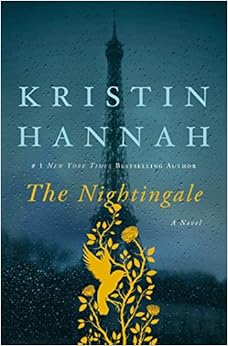
France: The Nightingale


The Nightingale
by Kristin Hannah


Seems like everyone I know has read this one, and I guess that makes sense since it's been on the NY Times bestseller list for 53 weeks.  The story is richly compelling, one you won't want to put down until you've reached the conclusion.  I love those kinds of novels.  They make me stay up too late at night, walk around the house with the book in my hand, and put off daily chores in favor of squeezing in a few pages at any opportunity. 

Set in France during World War II, this is the story of the French experience of the Holocaust, told from the perspective of two sisters who react to the German occupation very differently but who ultimately find they have more in common than they ever believed possible.  Vianne, the elder sister, is happily married with one child, Sophie, when the war arrives in France and changes everything, beginning with her husband Antoine's departure for the front.  Alone and unsure, she bravely rises to the occasion, coping with the German officers who billet in her home, the loss of her best friend to a concentration camp, and the extreme poverty and hunger that all are facing.  Her younger sister, Isabelle, was always a rebel in youth and continues to be so as she refuses to accept the German occupation of her beloved France and joins the resistance, taking on increasingly dangerous missions to try to save her country and as many human beings as she can along the way.  Their relationship is strained because of childhood trauma - the death of their beloved mother and their father's resulting neglect and absence from their lives.  But as the story unfolds, they realize their beliefs about each other are utterly wrong.  There are more ways than one to be brave and righteous in the face of horror.

I've previously resisted reading Kristin Hannah's novels because I perceived them to be in the chick-lit category, which I have not been very interested in reading.  Holocaust themes, however, generally defy the non-substantive subject matter that I judge chick-lit to embody.  I remember once in grad school, we read Maus I and Maus II, by Art Spiegelman.  These are graphic biographical novels that tell the story of Spiegelman's journey to understand his father's history as a Holocaust survivor and to make sense of their relationship.  The discussions we had in class about these books were complex and heavy ... and ultimately, unanswerable.  How can the Holocaust be conveyed with both accuracy and integrity in any form of art?  Is it appropriate to do so?  Who has the right to do so?  What is our responsibility, as readers, for receiving a biographical account of someone's Holocaust experience?  Does that change if the account is fictional? 

I am drawn to novels about this unthinkable part of human history that took place less than a century ago.  And I've thought a lot about why.  Because it feels really strange to "enjoy" something about a dark stain on humanity.  It's like when my daughter and I visited the Holocaust Museum in Washington, DC last year and afterwards, someone asked us, "Did you have fun?"  Um, ... no.  "Fun" is not the adjective to use for the Holocaust Museum, and neither is "enjoy."  We were so somber, so introspective, so humbled as we walked through the exhibits, we did not speak.  After a short time, we went in separate directions, silently agreeing that we needed to bear witness in our own private ways.

And that's what I think Holocaust fiction does.  It forces us to bear witness.  To look with eyes that can't be shut, to remember, hold space for the victims, and respect the survivors and their descendants who live with the weight of this history.


Friday, March 4, 2016

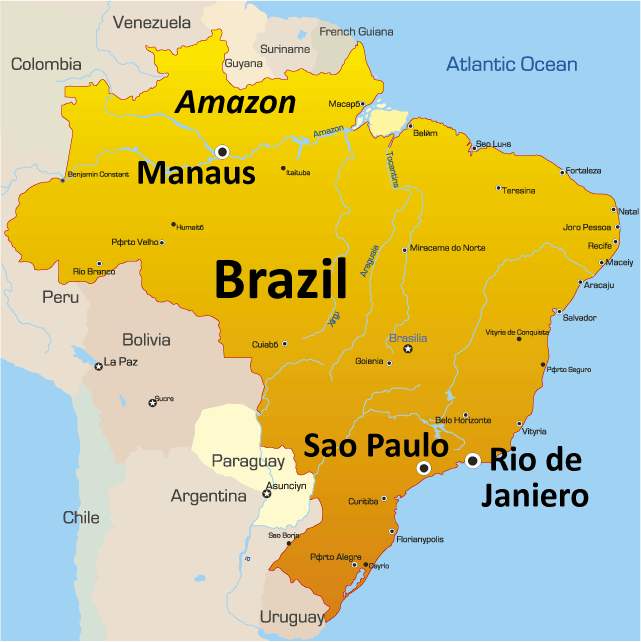
Brazil: Snow Hunters


Snow Hunters
by Paul Yoon


I like the idea of this book more than the book itself.  The themes of immigration and learning how to thrive in a new land and culture are among my favorites, but alas, this book is not.  The main character, Yohan, is a quiet, contemplative refugee who we meet as he arrives in Brazil after two years in a Japanese prison camp.  We don't know why he decided not to return home to Korea after being released from prison at the end of the war.  We get very little insight about his former life in Korea, but there are glimpses of his reminiscence of the camp, where he cared for his friend Peng after he was blinded in battle.  We know he has been traumatized in a way the keeps him from truly connecting to those he comes to know in Brazil.  The story, which has little dialogue and much exploration of Yohan's inner thoughts and feelings, spans ten years without much of anything happening.  I agree with other reviews that note the poetry of the narrative, but the book did not speak to my heart.

P.S. I do think Snow Hunters should get a prize for most beautiful, mesmerizing covers.  I just love the feelings it evokes.

And yes, for those of you who are following closely enough, I have suddenly gone out of order.  Gasp!  So here's what happened ...

About two weeks ago, I experienced a miserable night of insomnia.  You know, those never-ending hours of darkness where you find yourself tossing, turning, kicking off the sheets, yanking them back on, reaching ridiculous levels of frustration over any little sound in the night ... not that you were going to be sleeping anyway.  My mind was racing with my growing list of things to do, and suddenly, I realized I was feeling exactly the same way I used to feel before moving away from the chaos of the Washington DC area.  I had one of those lightbulb moments, suddenly understanding that after a long and lovely break from stress, which I'd credited to my lovely new hometown in the Shenandoah Valley, I'd somehow managed to allow the craziness back into my life.  And I was suffering the consequences of forgetting to be mindful about how I spend my days. 

I got up at about 3:00 a.m. and made a list of all the things I had committed to and all the things that were worrying, stressing, or overwhelming me.  And then I made some changes.  I communicated with some very wonderful, supporting, understanding people whose help I needed to set better boundaries or back out of things I really wanted to do but just couldn't follow through on.  (They were all amazing about it, by the way ... note to self: keep surrounding yourself with people like this while also being more careful about making promises you can't keep.)  Over the next week, I focused on getting things ... er, mainly myself ... back under control, and I'm happy to say that the process itself cured my insomnia and the impact of the process has significantly reduced my stress.

On the chopping block, unfortunately, was this blog.  I was going to retire it without even getting very far into my own self-assigned challenge.  Reading is probably the most important gift I give myself.  It's my escape, my relaxation, my form of meditation, my chance to learn and grow.  It's something I share with people I love ... my mother, sister, mother-in-law, closest friends, favorite colleagues, and sometimes my children although they don't read as much as I wish they did.  It's a huge part of my identity.  And the blog, while fun and interesting and challenging, has detracted from the overall power that reading has to positively influence my days.  Too much worry about picking the right book, finding one that I even want to bother with reading, and feeling frustrated when the one selected turns out to be disappointing.  I suffered over Bhutan ... found plenty, just didn't really want to read them right now, or maybe ever.  So I was ready to throw in the towel and skip the entire blog instead of only Bhutan.

But then I read this book set in Brazil anyway.  It was freely chosen, for myself, and not for the blog, and I wanted to write about it.  So I'm switching things up.  Changing my own rules.  I'll keep blogging since I'm really doing this for myself anyway.  I mean, I do hope that anyone who is reading this actually enjoys it, but I know there aren't too many people clicking on the link to these pages and that's okay.  This is about my journey, so I'm kicking back just a little and plan to keep working my way around the world but in the order in which I feel inspired.  I've said before that often times, books choose me.  I can't, and frankly don't want to force myself to pick up a book that's not calling my name. 

So today ... Brazil, and tomorrow ... I'm not sure.  That's part of what I find joyful about reading ... you just never know where it will take you.