Tuesday, March 10, 2015

Australia: Ship of Brides


The Ship of Brides
by Jojo Moyes


The problem with Australia is there are just way too many good books to choose from.  And yes, I know that should be "from which to choose," but it just doesn't sound right in casual conversation or writing, so I'm throwing the rule out the window for the moment. 

Anyway, I spent nearly as much time searching for the right book set in Australia as I did the countries where there are hardly any options at all.  I came close to reading The Narrow Road to the Deep North, by Richard Flanagan, which just won the 2014 Man Booker prize, which is my favorite literary prize (see book nerd survey.)  I even bought a copy in hard back, anticipating that I would love it so much I'd want to have a copy to keep, share, and feature prominently on my bookshelf.  And I do plan to read it ... just not right now.  After I hemmed and hawed for days, maybe even weeks, I realized that I was stalling because I just wasn't in the mood for a prize-winning novel at the moment.  I wanted something lighter, easier to read, a distraction from the busy calendar of the moment.  So when someone suggested The Ship of Brides, by Jojo Moyes, I grabbed it.

Jojo Moyes is the author of one of my all-time favorite contemporary romance novels.  I don't actually read much romance, but the occasional romantic comedy (think The Rosie Project by Graeme Simsion) or one with a little twist of fairy tale (think The Snow Child by Eowyn Ivey) is perfect for a day when your brain is already on overload.  The first Jojo Moyes novel I read was Me Before You, and I absolutely adored it.  I fell in love with both Louisa and Will.  I laughed and I cried, both with the characters and all alone when the book was over.  If you haven't read it, you really must.  It's endearing.

The Ship of Brides had a different style and mood than Me Before You.  When writers successfully tell different kinds of stories and demonstrate linguistic versatility, I'm impressed.  I think it must be challenging to shift the voice of your writing, much as I'm sure it's challenging for actors to portray different types of characters successfully enough that you forget who is actually doing the acting.  I didn't love The Ship of Brides as much, but I enjoyed reading it and felt I'd learned an interesting bit of history I hadn't been familiar with before.

The novel is about young Australian women who travel by ship, courtesy of His Royal Navy, at the end of World War II to join their British husbands who'd been shipped back home once the war ended and their military tours of duty in Australia were over.  We meet a handful of the several hundred aboard the naval ship, each from a different background and each leaving home for different reasons and with different hopes and dreams for the future.  There's Maggie ... a down to earth farm girl; Avice ... the over-indulged, socialite who thinks too highly of herself and is ill-prepared for the disappointment she must face; Jean ... bawdy and crass but lovable in her desperation for a better, happier life; and Frances ... running from her difficult past and frantically trying to stay hidden in the shadows. 

We don't get to meet the men in their lives, except through what they share with each other, but the naval personnel who are charged with transporting such unusual cargo feature prominently.  Not all of them are nice characters, but it was easy to become attached to the Captain and to Nicol, the introspective sailor whose trauma serves to remind us that the journey is happening because of an ugly war.

There wasn't a lot of action, but the story of Frances is mysterious enough to add a little intrigue.  I especially loved Jojo Moyes's dedication at the front of the book where she hints at her grandmother having been a war bride and perhaps the inspiration for the novel.  I just wonder which of the characters is based on Grandma Moyes!


Other Books Considered:
 
The Sound of One Hand Clapping, by

The Narrow Road to the Deep North, by  
 
Riders in the Chariot, by Patrick White
 
The White Earth, by Andrew McGahan


Past the Shallows, by Favel Parrett
 

The Daughters of Mars, by Thomas Keneally

A River Town, by Thomas Keneally

The Paperbark Shoe, by  Goldie Goldbloom 

 
Previously Read:
 
Coldwater, by Mardi McConnochie
 
The Book Thief, by Markus Zusak (Australian author; set in Germany)
 
The Secret River, by Kate Grenville
 
The Forgotten Garden, by Kate Morton
 
The Light Between Oceans, by M. L. Stedman
 
The Rosie Project, by Graeme Simsion

The Silent Wife, by A. S. A. Harrison

Mr. Pip, by Lloyd Jones
 
Rabbit Proof Fence, by Doris Pilkington


Saturday, February 14, 2015

Survey Says: Book Nerd!


I'm not sure when the word "nerd" became a badge of honor, but between my childhood and now, somehow it has evolved.  When I was a kid, no one wanted to be a nerd.  Now, it's a term of endearment, often used self-reflexively, and everyone wants to be one.  One of my sons is a gaming nerd, the other son is a Star Wars nerd, and my daughter is ... well, she's still an adolescent and unpredictable, so I won't call her a nerd, just in case she's not in the mood to see it as a positive thing.

It goes without saying that I am a book nerd.  This is an actual thing, as evidenced by Barnes and Noble's recent survey that allows you to quiz yourself and see how nerdy you actually are.  Go ahead, take it and see what you get!


So, out of 50 possible points, I got 46.  I lost points for not actually reading a book while I was taking the nerd quiz; not bugging people about books after I've recommended them (point of pride for me, because it takes a lot of self control), not having a pet with a literary name (but I vow that my next pet will!), and not owning a first-edition book.

You may be wondering where the Australia book is and why I'm wasting time on book surveys instead of reading Down Under.  I've had a hard time settling on an Australia book because, unlike the little countries like Armenia and Albania where there are too few options, the Aussies have way too many to choose from.  I've already read some good ones and am enjoying the search for the Australia book that wants to call out my name for the blog.  So far I haven't found it but have enjoyed a few other novels.  Here's what I've been spending time on, in case you need a recommendation:

Remember Me Like This, by Bret Anthony Johnston - Really enjoyed this low-key psychological thriller about a family whose abducted son returns home after four years.

Year of No Sugar, by Eve O. Schaub - This was an okay-but-not-my-favorite memoir about a family that (sort of) gives up sugar for a year. 

The Storied Life of A. J. Fikry, by Gabrielle Zevin - A novel about books!  This was a lovely story about family and the importance of learning to trust.  It was a nice, light read ... perfect for a cold day, wrapped up in a blanket, with nothing to do but immerse yourself in the story.

The Girl on the Train, by Paula Hawkins - Sometimes I just like to read the bestsellers so I can partake in casual book discussions.


P.S. I'm still taking suggestions for Australia books!  You can leave a comment here or email me at theworldbybook@gmail.com.  Thanks!

Friday, January 30, 2015

Aruba: Loving Natalee


LOVING NATALEE
by Beth Holloway


I can't seem to write this blog piece about Beth Holloway's Loving Natalee.  What can you say about a book that tells the story of a promising young woman's disappearance and her heartbroken mother's painful journey to find her and eventually, to reconcile the mystery of her loss?  I've written, revised, scrapped the whole thing, started over, puzzled about it, and am still stuck.

It's hard to imagine anyone not being familiar with the Natalee Holloway tragedy, but in case you're not, Wikipedia offers as good as summary as any.  What you should know about the book is that while it isn't the most well-written piece of writing, it's gut-wrenching exploration of Beth's pain and helplessness followed by her strength and determination pretty much supersedes any critique you may otherwise feel compelled to offer.  It just doesn't feel right.  So I'm not going to do it. 

I'll be honest.  I selected this book because there were literally no others set in Aruba that I was willing to read.  I spent a lot of time searching, using all of my standard book-finding resources as well as my good friend, Google.  Some biblio-circumnavigators don't even include Aruba in their list of countries so I couldn't use other blogs.  There are Aruban writers, of course, but apparently their books are published in Dutch or Papiamento, not English.  I found a couple of Young Adult novels, several books in what seemed to be the "bodice ripper" genre of romance, and a series of quasi-mysteries by Daniel Putkowski, an American writer who spends half of his time in Aruba and feels at home there.  I tried a few chapters of Daniel Putkowski's An Island Away, but I found the characters unappealing from the onset so I abandoned it quickly.  And when my Facebook plea for recommendations went unanswered, I decided to read Beth Holloway's tribute to her beautiful daughter, who disappeared during her senior trip to Aruba.  
 
You should read this book if you are curious about how things work (or don't work) in Aruba's justice and legal system.  Take note of Beth's excellent advice at the end of the book when she talks about how to be safe while traveling outside of the United States.  She's not complimentary about the State Department (which I found to be unfair ... full disclosure: I have been a vice-consul at two overseas posts and spent many years working in Washington in support of American citizens who encounter difficulties while traveling).  But she does get it right when she says that once you're outside of the United States, things work differently and U.S. officials' ability to influence a foreign government is often quite limited.  And it's okay that she's angry about this.  In fact, she's earned the right to be angry about whatever she wants to.  I'd be remiss though if I didn't take this opportunity to say here that vice-consuls around the world do great work for Americans, and we are so fortunate that our U.S. passports grant us significant support and advocacy when we are overseas.

You should also read this book if you are curious about how the mother of a lost child keeps standing.  Beth takes us on that journey with her, from shock to anger to determination to crippling grief to resolution.  Her family, friends, and faith get her through to where she is now.  She writes a lot about hope and is an amazing example of how someone use their personal tragedy to do something good in the world. 

Beth Holloway writes about what's commonly accepted as life's most unthinkable loss.  Her book succeeds in making the Holloway family real, something that news stories often fail to do since we read about them or watch news stories on tv from the comfort and safety of our own homes where it's easy to think "that will never happen to me."  But it did happen to Natalee ... and it's still happening to Beth and the rest of their family.  I suspect it will never end.


Monday, January 19, 2015

Armenia: Gilgamesh


GILGAMESH
 by Joan London


As I'm finding with many of the small countries in the world, there isn't a lot of English language fiction set in Armenia.  I had already read what is likely the most well known novel about Armenia, Chris Bohjalian's The Sandcastle Girls.  So of the few others that I found, I selected Gilgamesh, by Joan London, because of its theme of immigration and the experience of being in an unfamiliar place, which (as you have probably realized) is a favorite of mine.  The novel's namesake, Gilgamesh is the protagonist in The Epic of Gilgamesh, a poem written around 2100 BC that is considered the first work of literature.  He is a demi-god and king who has many great adventures, but it is his friendship with Enkidu, a wild man created to subdue Gilgamesh's arrogance, that serves as the thematic undercurrent of the novel.

In Joan London's Gilgamesh, we follow the lives of Edith, beginning with her parents' migration from England to rural Australia, and of Jim, her illegitimate son.  Edith and her sister, Frances, grow up in extreme poverty, in a remote part of Australia on the coast where their only exposure to the outside world is through a small seaside resort that was built next to their patch of unfarmable land.  When their cousin Leopold and his Armenian friend, Aram arrive unexpectedly for a visit, the world opens up to Edith and she begins to imagine, for the first time in her life, the possibilities beyond what she has experienced of life thus far.  Their departure breaks her heart because Leopold has become a treasured friend and confidante, but even more so because of Edith's brief romance with Aram, who leaves Australia for his homeland, Armenia, never knowing of Edith's pregnancy.

Gilgamesh
Despite the trouble brewing in Eastern Europe as the world faces war in the late 1930's, Edith, too, decides to leave Australia behind and sets out for Armenia, which she has built up to be a magical place where she will find Aram, introduce him to their son Jim, and live happily ever after.  And so she sets out with Jim, crossing the ocean to England, then heading overland by train into Armenia, a country that everyone wants to leave and no one, other than her, is trying to enter.  Her life there is hardly the adventure she had imagined, but she lands among friends: Hagop, a kind Armenian she meets on the train; his wife of convenience, a musician who was injured in a bombing and is confined to a wheelchair; and Tati, the elderly grandmother who needs constant care but keeps Edith centered through her words of wisdom. 

Edith waits for Aram until she literally cannot wait any longer and, because of the dangerous conditions in Soviet-ruled Armenia, she and Jim must leave.  Here, she encounters Leopold once more ... steadfast, loyal, and unassailable Leopold ... and within the safety of his love and friendship, begins her journey to return home.

Gilgamesh is a beautiful story of searching, not just for one thing but for all things that make life whole.  Along with Edith, Frances is searching (for love); Leopold is searching (for meaning); Hagop is searching (for redemption); Irina is searching (for reconciliation); and little Jim, as he grows up, is searching (for himself).  The prose is poetic in places, clear and direct in others, and at all times, giving us a glimpse of Edith's innermost dreams as they shift from desperation to leave back to desperation to return home. 


Other Books Considered:

All the Light There Was, by Nancy Kricorian


Previously Read:

The Sandcastle Girls, by Chris Bohjalian

Monday, December 29, 2014

Argentina: Cartwheel


CARTWHEEL
by Jennifer Dubois


Cartwheel, by Jennifer Dubois, isn't really about Argentina.  It just happens to be set in Argentina, which is why I selected it, but I can't claim to have learned anything about the country, its people, or culture through reading it.  But that's okay because it was a really intriguing novel that spoke volumes about how difficult and dangerous it can be to be a stranger in a strange land, especially when youth and lack of experience influence one's judgment and inform one's decisions.  The story is about an American college student who is studying abroad for a year in Buenos Aires.  Lily is smart, confident, and hopeful but somehow, in her enthusiasm and naiveté, manages to get off on the wrong foot with her host mother, who misinterprets Lily's behavior and disapproves of her romance with Sebastien next door, and with her roommate Katy, whose demeanor is more serious, reserved, and contemplative.  When Katy is brutally murdered, Lily's discordance with those who believe they know her well proves to work against her in a terrifying and irreversible way.

Neither Katy's murder nor Lily's arrest and prosecution are the focal point of the novel, however.  Rather, the book is about perspective.  Dubois's storytelling weaves together the points-of-view of many characters: Lily; her lover, Sebastien; her host mother, Beatriz; her prosecutor, Eduardo; her sister, Anna, her father, Andrew, and to a lesser degree her mother, Maureen.  Their beliefs about Lily, who she is and what she's capable of doing, stem not only from their observations and interaction with her, but also from what they've heard from others and what assumptions they bring to the equation, irrespective of anything having to do with Lily at all.  Dubois artfully crafts multiple narratives of Lily, and only through careful attention and close reading is the reader likely to pick up on all of the subtleties and nuances of what details lead to which misconceptions.

Who is Lily?  No one truly knows, including Lily herself since that is both the curse and the blessing of the young adult.  She went to Argentina for the very purpose of beginning the journey to discover herself, a journey that is horrifically interrupted by Katy's death.

The author discloses that the inspiration for the book was the case of Amanda Knox, an American college student who studied in Italy and found herself in identical circumstances to the fictional Lily.  Most of the fact pattern in Lily's case follows closely, if not exactly, with Amanda's.  What Dubois does with her novel is take us inside the minds of those involved.  Anyone who followed the Knox case probably felt perplexed and disturbed and indignant and sympathetic all at the same time.  Dubois illustrated for us what we should know but often forget in the human drama that takes place all around us ... that things are often not as they seem and that it is impossible to ever be free of bias and assumption.  In terms of Lily's guilt or innocence, we don't get to explore this much, not even through peeking inside Lily's thoughts.  Dubois sticks tightly to the theme of perspective, and what we know about Lily is mainly what she thinks and feels and assumes about others.

Cartwheel is what I call a "head book."  There's not a lot of action.  Instead, it's largely philosophical and extremely intellectual.  I literally read every single word for fear of missing some fascinating detail that would help me to understand.  If only we listened to one another so closely ...


Other Books Considered

Imagining Argentina, by Lawrence Thornton

Departing at Dawn, by Goria Lis

The Honorary Consul, by Graham Greene

Stealing Mona Lisa, by Carson Morton (mystery, Kirkus Reviews' Best of 2011 Fiction and a Library Journal Best Mystery of 2011) **

Life, After, by Sarah Darer Littman (YA)

An Open Secret, by Carlos Gamerro

The Ministry of Special Cases, by Nathan Englander

The Lighthouse at the End of the World, by Jules Verne

Blood Tango, by Annamaria Alfieri


No Place For Heroes, by Laura Restrepo

The Foreigners, by Maxine Swann


Tuesday, December 23, 2014

Antigua and Barbuda: Lucy


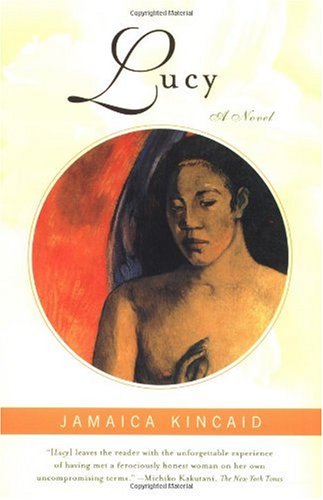
Lucy
by Jamaica Kincaid


I finished my book for Antigua and Barbuda over a week ago, but with the holiday season fully in swing, I haven't been able to spend time writing about Jamaica Kincaid's enchanting novel, Lucy.  Instead, I've been doing the usual Christmasy sorts of things:  putting up a tree, shopping, wrapping, a little baking (this is more my daughter's domain), and spending time with family.  Since I've been in a long phase of trying to be more minimalist in my lifestyle and to stay in control of the ever-present clutter that comes with family life, all of the Christmas paraphernalia has generated more than a little stress.  I've tried to balance that out with making sure we spent time and energy on holiday activities that remind us of what Christmas is all about in the first place.  I took my daughter Grace and my eldest son's girlfriend Brittanie to see the Nutcracker, which was a wonderful way to kick off the season.  We've been Christmas caroling and to a couple of holiday concerts.  And we've tried hard to simply enjoy the peacefulness that is underneath the Christmas chaos ... seriously, it's there ... you just have to dig for it.

So far, my favorite Christmas activity was the early gift exchange we had last night with my husband Tim's family.  We've gotten to be a rather large group that spans an age range of more than 80 years.  My father-in-law just turned 86, and there's one great-granddaughter who is only five years old.  Fifteen of us crammed in around the kitchen table in the tiny kitchen of Tim's childhood home.  We needed two tables:  one for the adults plus the little one, and another for the "kids," who are ages 22, 22, 21, 19, and 16.  There was no Christmas tree as my very practical mother-in-law gave that up years ago in favor of a holiday wreath featuring lights and a handful of her favorite ornaments.  There were no expensive gifts, just small presents that were thoughtful and loving.  Tim's oldest brother always gives everyone a lottery ticket and some kind of little toy that amuses even the biggest kids.  It's now a tradition to which we all look forward.  Many years ago, my mother-in-law realized we share a love of books, so I always give her a few books, wrapped individually and tied together with a bow, which I look forward to enjoying after she's finished.  We have fried oysters for dinner, a holiday tradition that my father-in-law enjoyed in his childhood and has handed down to all of us.  We hold hands when we say the blessing before we eat. 

This year, we sang Jingle Bells together, much to the little one's delight, and best of all ... Santa Claus made an appearance!  It was too bad that Uncle Mike missed the whole thing though since he was "out of the room" the whole time Santa was visiting!

Best of all, we laughed, told jokes, reminisced, and enjoyed the company of one another.  THAT is what Christmas is really all about.  Later this week, we'll be heading to Tennessee, where my mother, sister, brother-in-law, 8-year old niece, and 6-year old nephew will be part of another set of cherished days and memories.  We'll have another chance to remember why we go through all of the chaos and stress of holiday preparations.

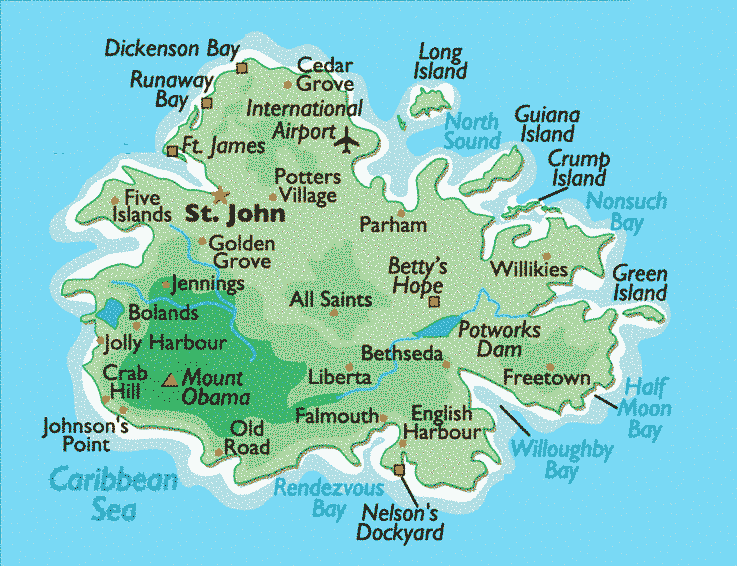
Despite being busy with holiday preparations and events, I have, of course, made time for reading ... just not as much for writing about reading.  There aren't a lot of books that are set in the tiny Caribbean island of Antigua, but I managed to find a few.  Years ago, I read Jamaica Kincaid's novel, Annie John, and found it to be delightful, so I decided to give Lucy a try.  In the spirit of transparency, the main action of the novel takes place in the United States, and Lucy's flashback memories are about an island home in the West Indies.  There is no specific mention of Antigua, but given that the author hails from there, I think it's a safe bet that the cultural background Lucy brings to her experience of New York City reflects Kincaid's Antiguan heritage.  If you want to know more about Kincaid, the Huffington Post published a great article about why she's "such a badass." 

With fewer than 200 pages, Lucy is a quick read and a compelling story of a young girl who leaves her small island home and her family to work as an au pair for a wealthy family in New York.  We hear Lucy's voice throughout, and the single perspective offers a deep and powerful level of insight that doesn't often happen when stories are told by multiple characters.  What's magical about this technique is that as the story develops, the reader experiences life inside Lucy's mind while also recognizing how Lucy might be perceived from the outside.  She's angry, self-centered, and not especially nice ... that's how her actions and thoughts make her appear, and about halfway through, it becomes apparent that this is also how she feels.  She doesn't like herself any more than the reader does (at first.)  However ... as time passes, Lucy begins to share more (with readers) about why she is hurt and angry.  As she shines light on what happened in her childhood, she begins to understand herself ... but, being young, she is not mature enough to take action that will help her move through and deal with her feelings.

Lucy's relationship with Mariah, her employer, perfectly depicts their separate struggles as Lucy fights against wanting to break free of the home she both loves and despises, and Mariah tries desperately to hide from her crumbling marriage and hollow life by frantically showing Lucy all of the "wonderful" things about living in the United States.  As things begin to unravel, Lucy becomes impatient with Mariah's pretend sunny disposition and has no hesitation about telling her what she thinks and what life in the real world, away from Mariah's life of fortune and opportunity, is really like.  The story is truly about the coming of age, one with a fascinating glimpse of how difficult a time of life young adulthood can be, especially when you're navigating outside of everything that is familiar.


Other Books Considered

Ladies of the Night, by Althea Prince (short stories)

Loving This Man, by Althea Prince (fiction)

Considering Venus, by Isaac Gisele

Antigua and My Life Before, by Marcela Serrano

Monday, December 8, 2014

Angola: A Band-Aid for a Broken Leg


A Band-Aid for a Broken Leg
by Damien Brown


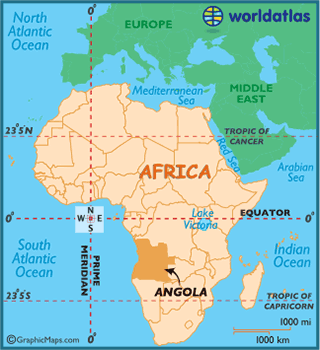
Although I'm not a big nonfiction fan, I do enjoy a good memoir.  They do for me the same thing fiction does ... give me a glimpse into the lives of others in a way that makes me think philosophically about things and issues I might otherwise not contemplate.  A Band -Aid for a Broken Leg is Dr. Damien Brown's story of his experiences serving a volunteer with the aid organization Doctors Without Borders.  Brown, who hails from Australia, gets hooked on the expat life after a medical trip to Thailand.  After returning home, his life in Australia seems mundane and uninspiring, so he signs up for DWB and soon finds himself in a sparsely populated village in Angola where poverty, AIDS, and desperation are all around him.  His memoir is both funny and sobering at the same time.  You'll find yourself laughing at Brown's deer-in-headlights response to things like lack of indoor plumbing, local surgeons trained on battlefields instead of medical schools, and a series of misunderstandings that arise because of cultural differences.  And then, on the next page, you'll find your heart breaking at the descriptions of starving children, young adults dying of AIDS, and mental illness that is misunderstood and untreated. 

Having been an expat myself, I can vouch for Brown's accuracy in describing how surreal is can be when nothing at all looks, sounds, smells, tastes, or feels familiar.  It is thrilling and overwhelming, all at the same time.  Once Damien finds his footing, he forges vibrant friendships that help him learn much about himself and realize how disparate and unknowable the world can be.

At the end of his six-month assignment in Angola, Brown decides to continue volunteering with DWB and spends time in two other African countries, both of which have similar challenges but neither of which steal a piece of his heart the way Angola did.  His love for his Angolan experience shines through in his writing.  I chose this book because of DWB's recent presence in current events during the Ebola outbreak in West Africa.  I wanted to peek behind the curtain and understand more about the work of the organization, the motives of the volunteers, and what life is like on the ground.  When I turned the last page, I did so with enormous respect for what DWB volunteers do ... and what they give up in order to do it.


Other Books Considered:

Angola: A Love Story, by Brandon Aguiar

Buried in the Sky, by Rick Andrew

Walking on Dry Land, by Denis Kehoe

Human Love, by Andrei Makine

The Book of Chameleons, by Jose Eduardo Agualusa

The Small Bees' Honey, by George Clark